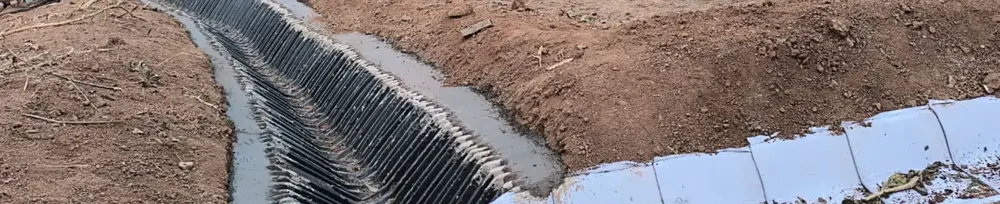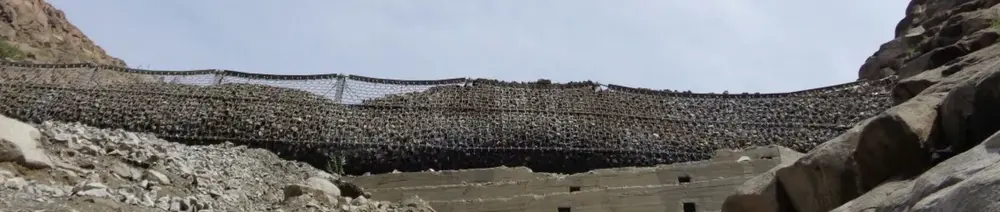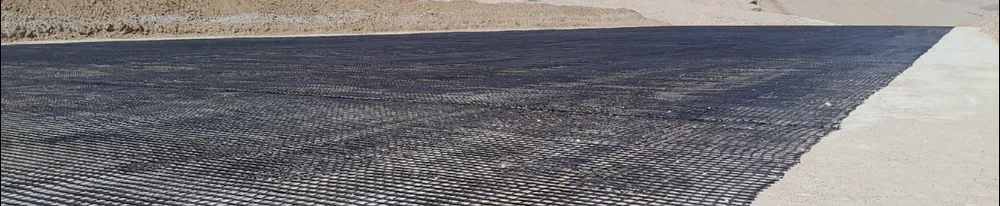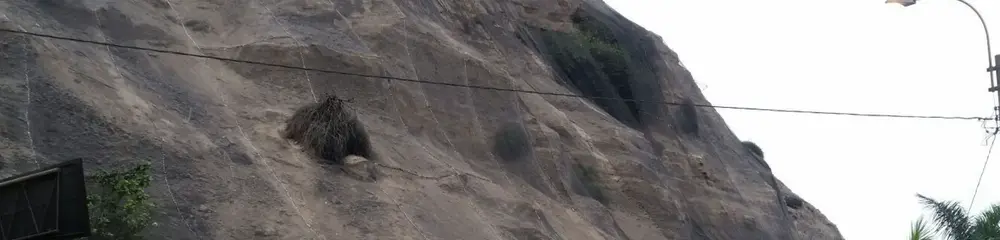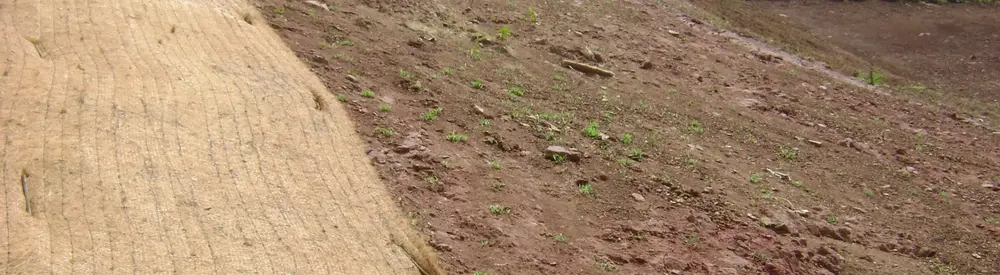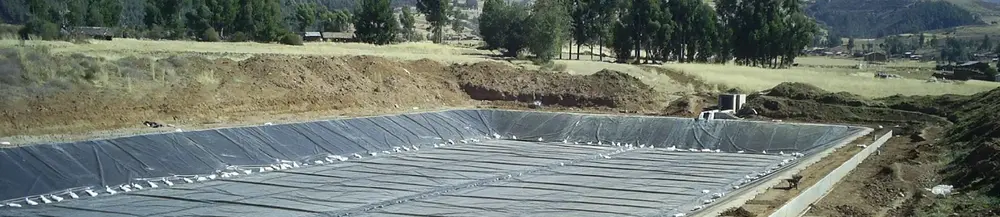
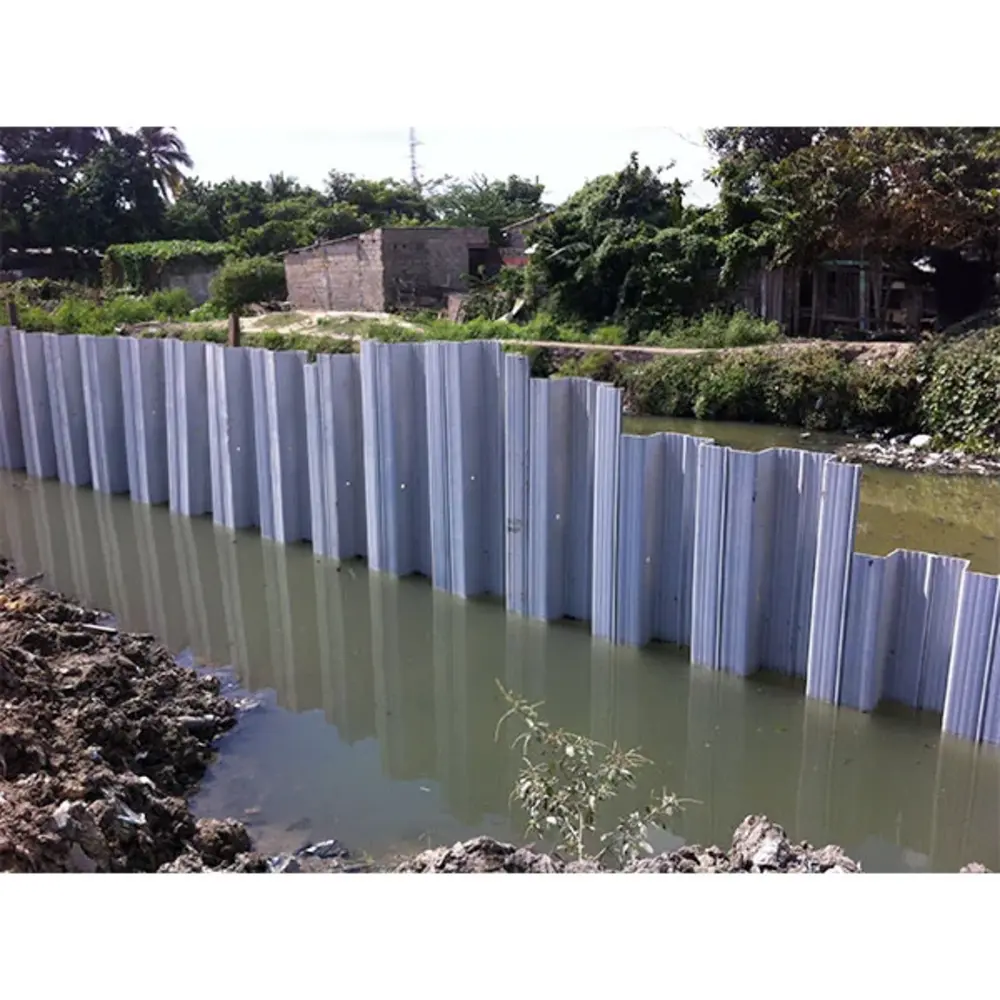
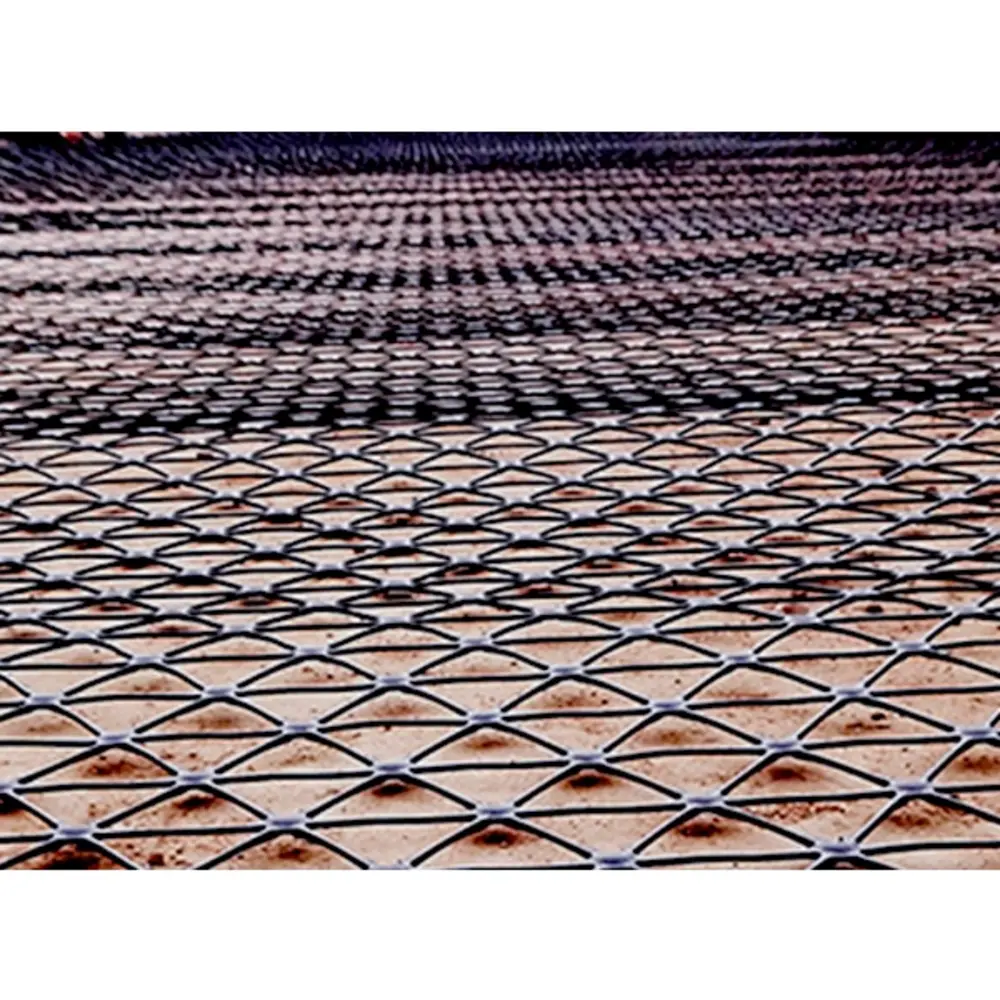


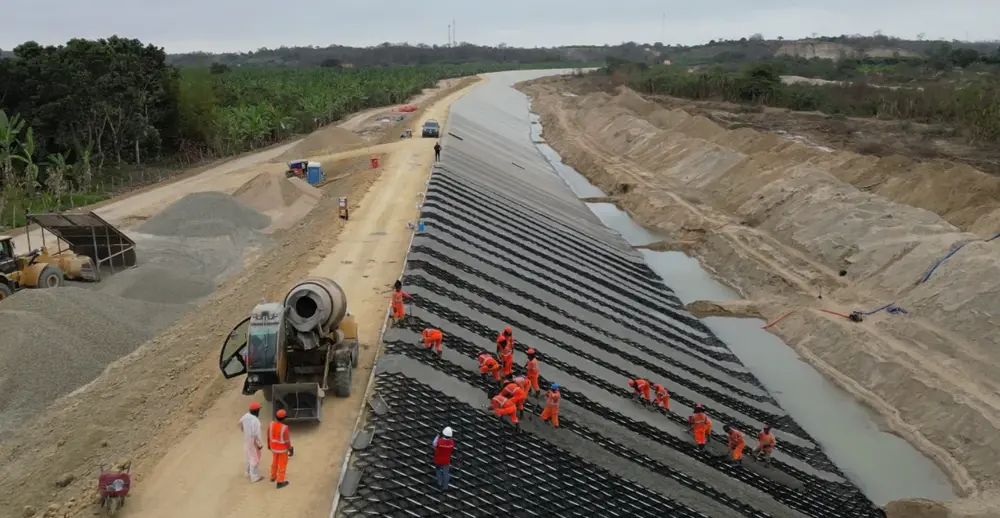
Along the section between Pueblo Nuevo and the La Palma intake, covering approximately 33 km on the left bank of the Zarumilla River, geosynthetic solutions were implemented to mitigate the effects of peak flood events.
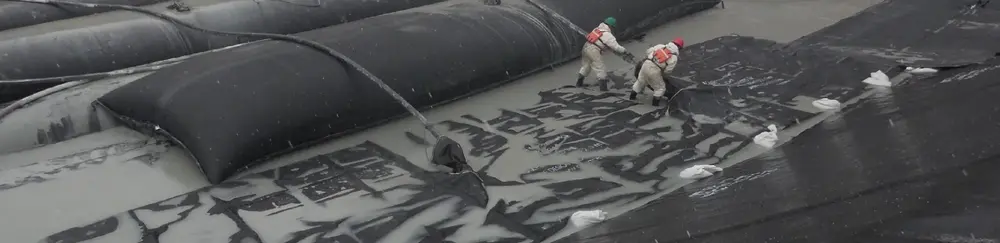
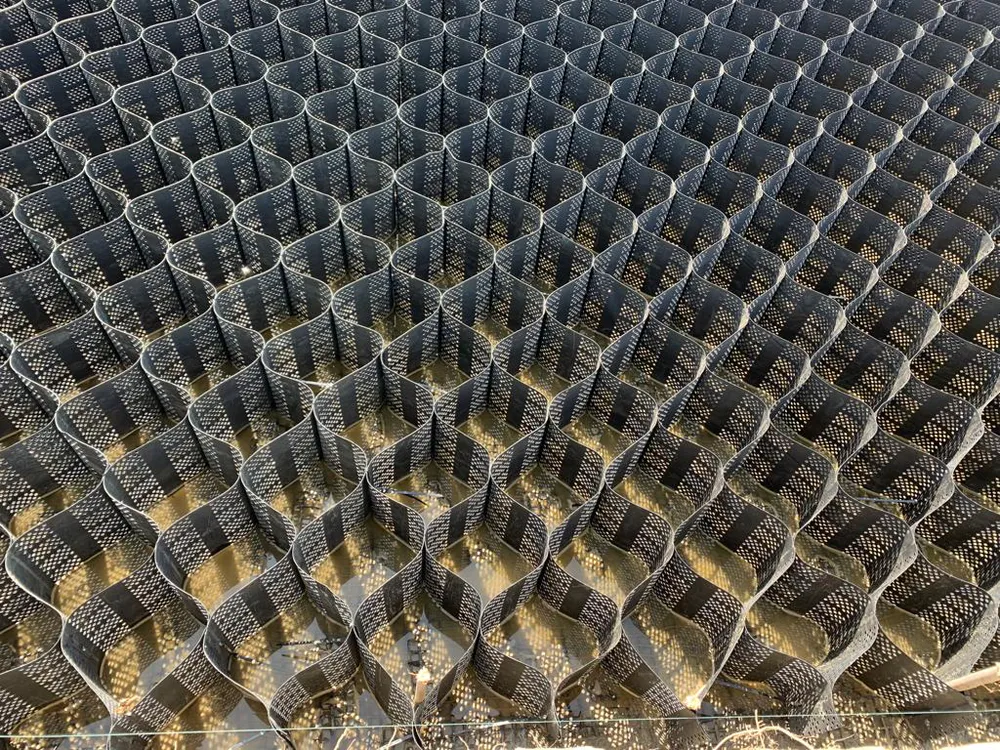
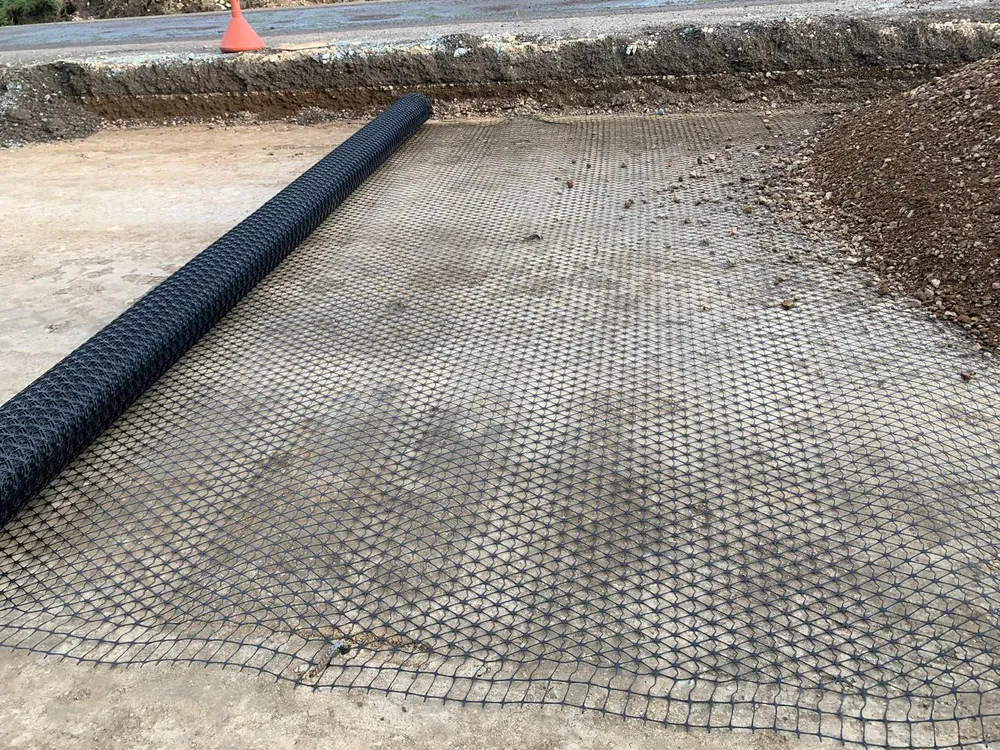
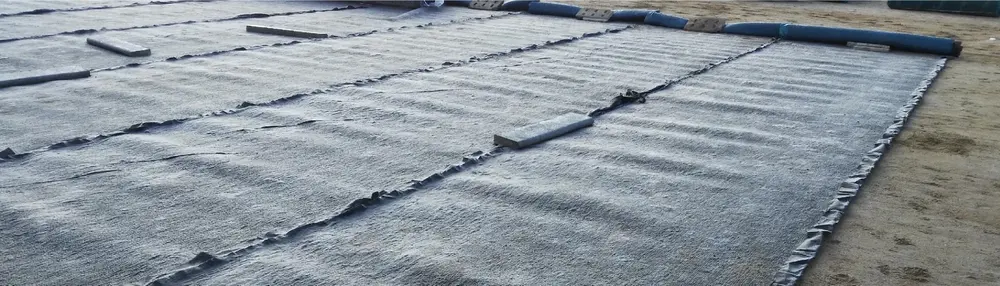
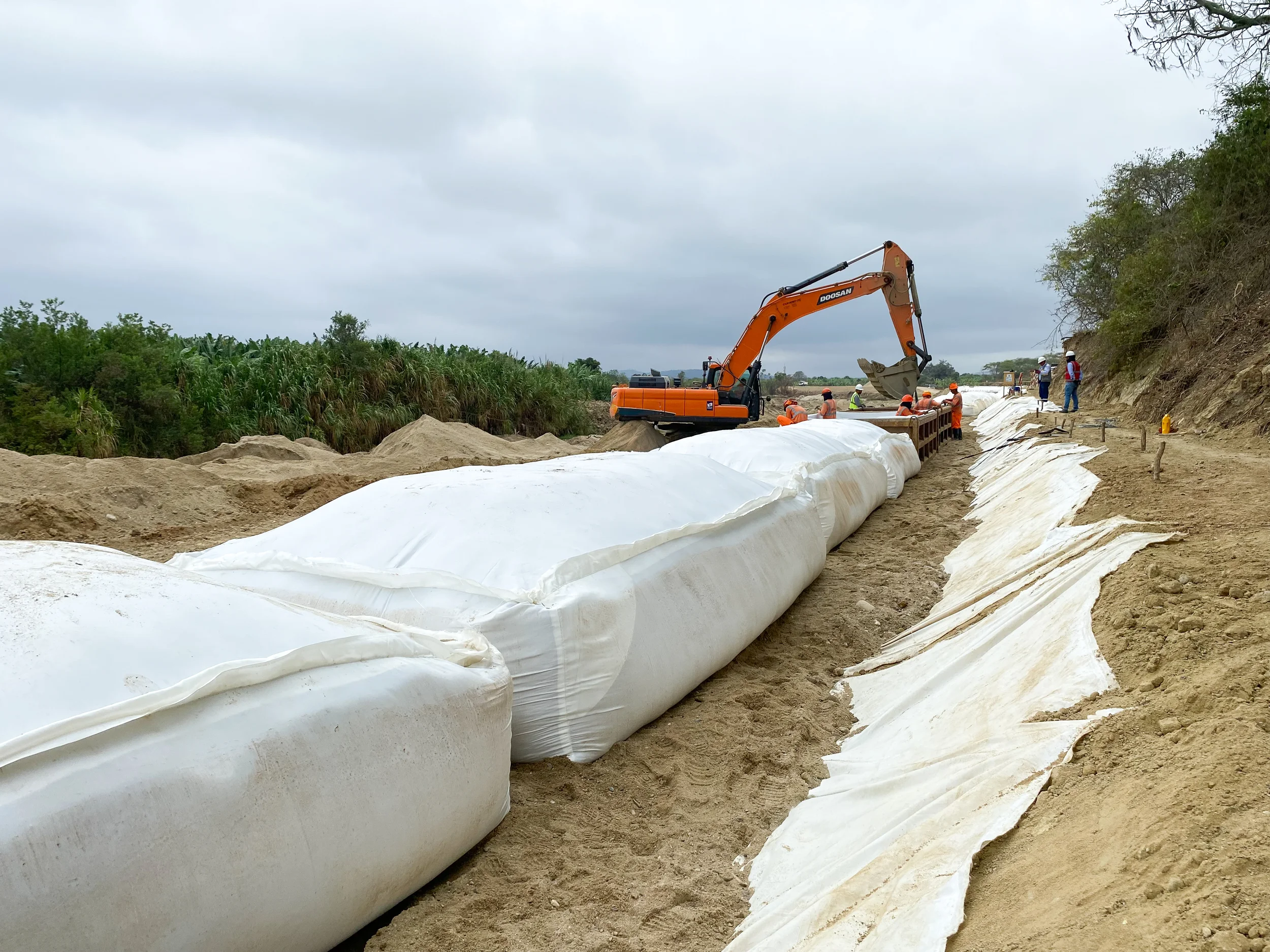
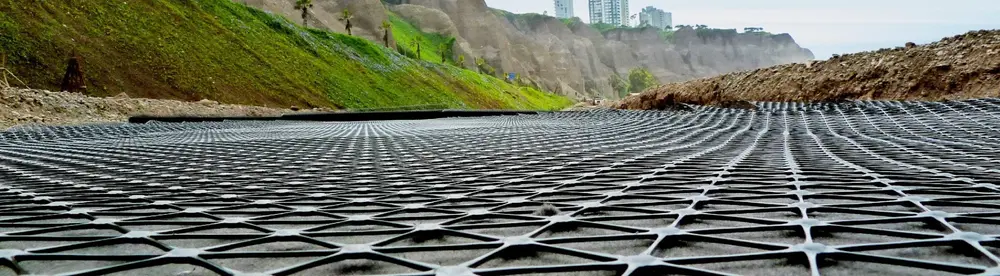
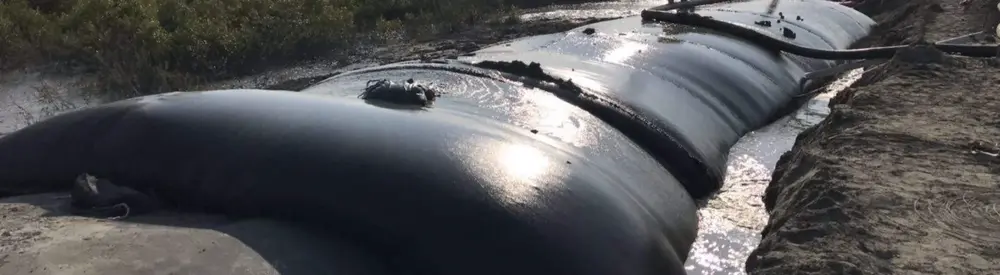
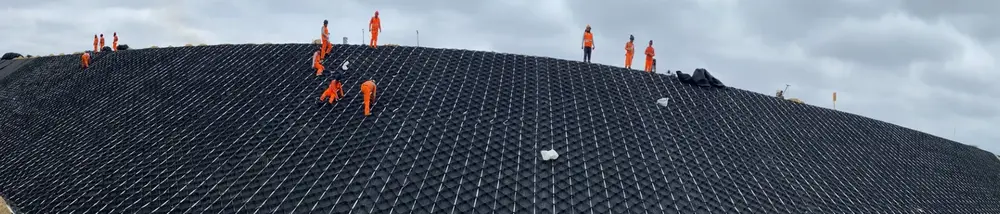
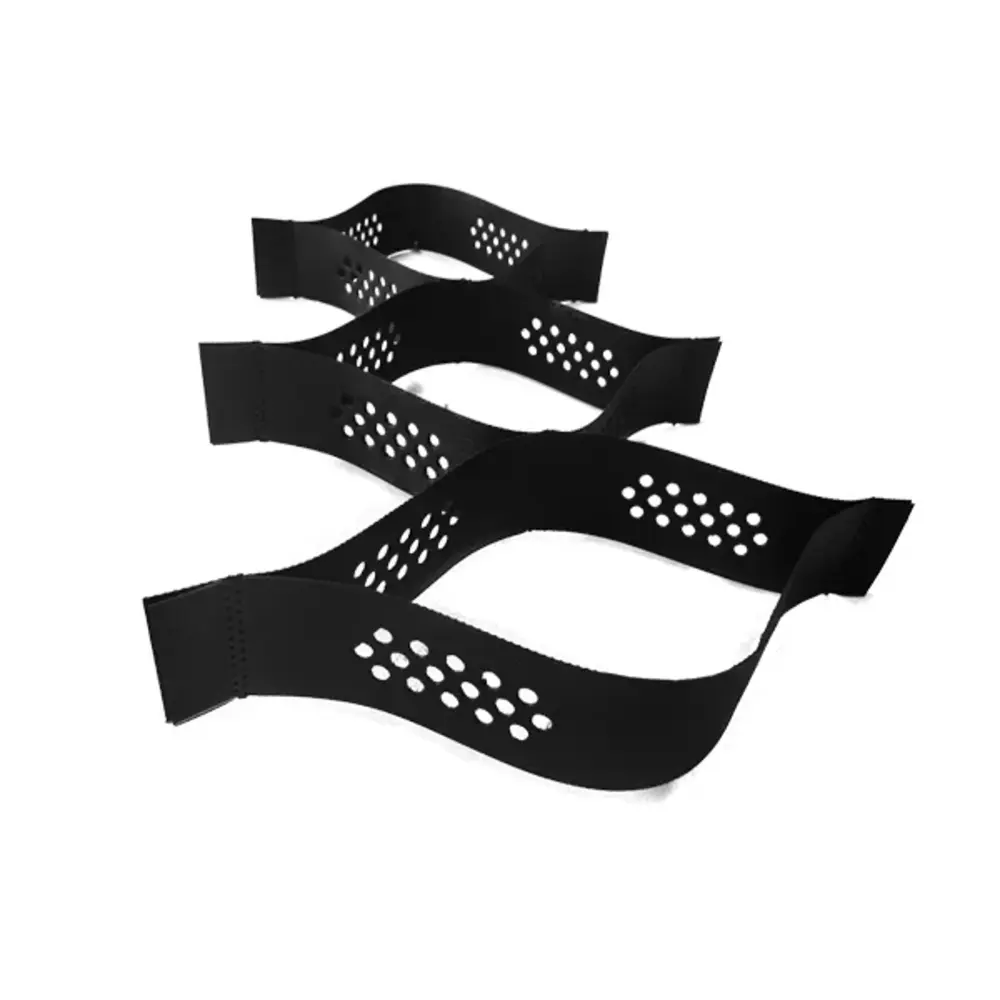
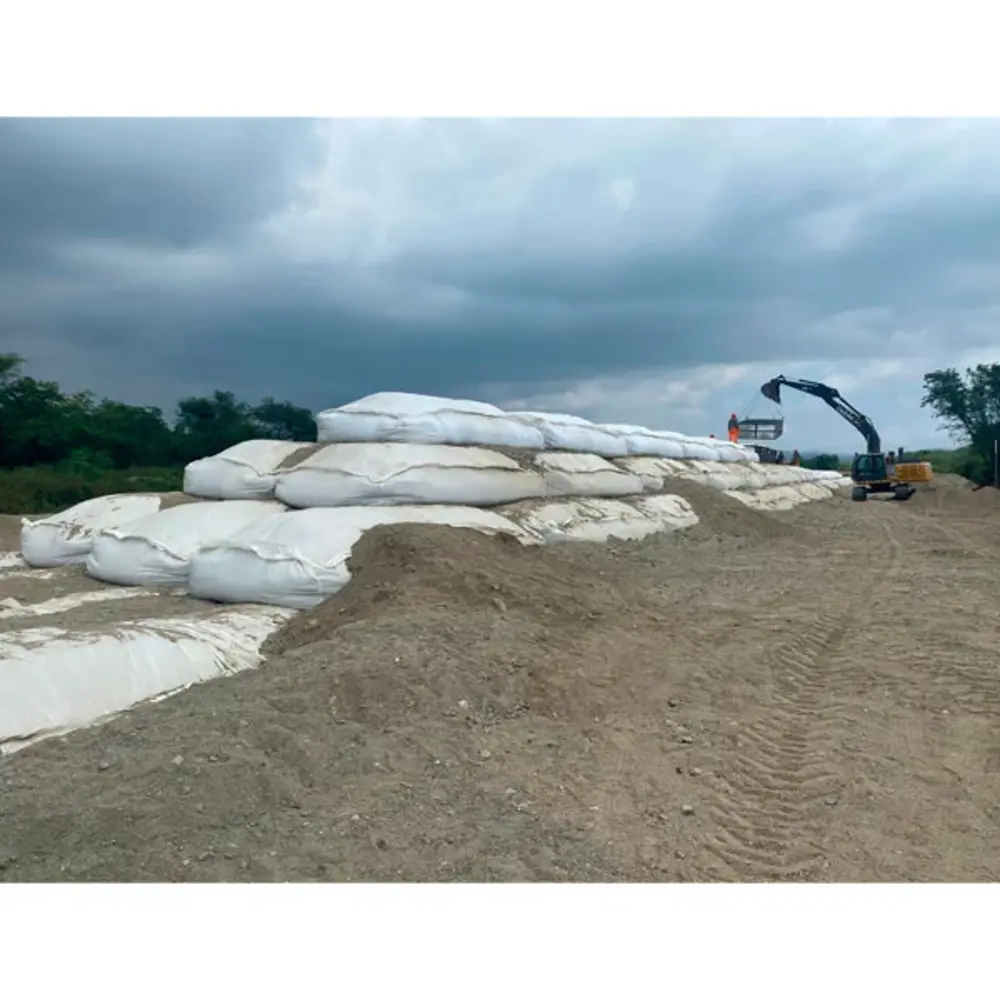
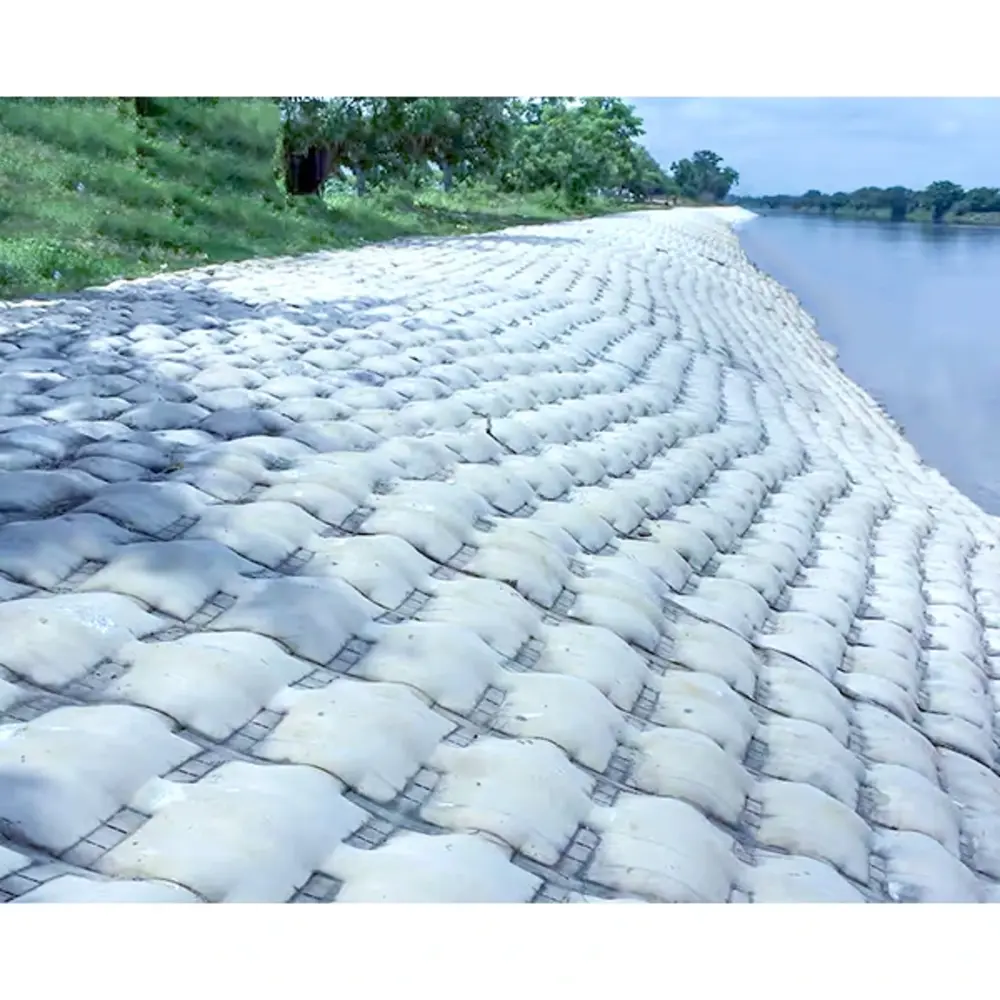
Two applications were defined based on hydraulic conditions: the first consisted of geocells on the slope and geotextile bags at the anti-scour toe, while the second involved geotextile bags distributed along the entire slope.
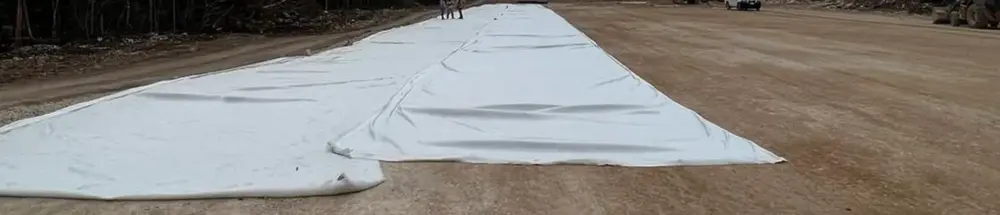
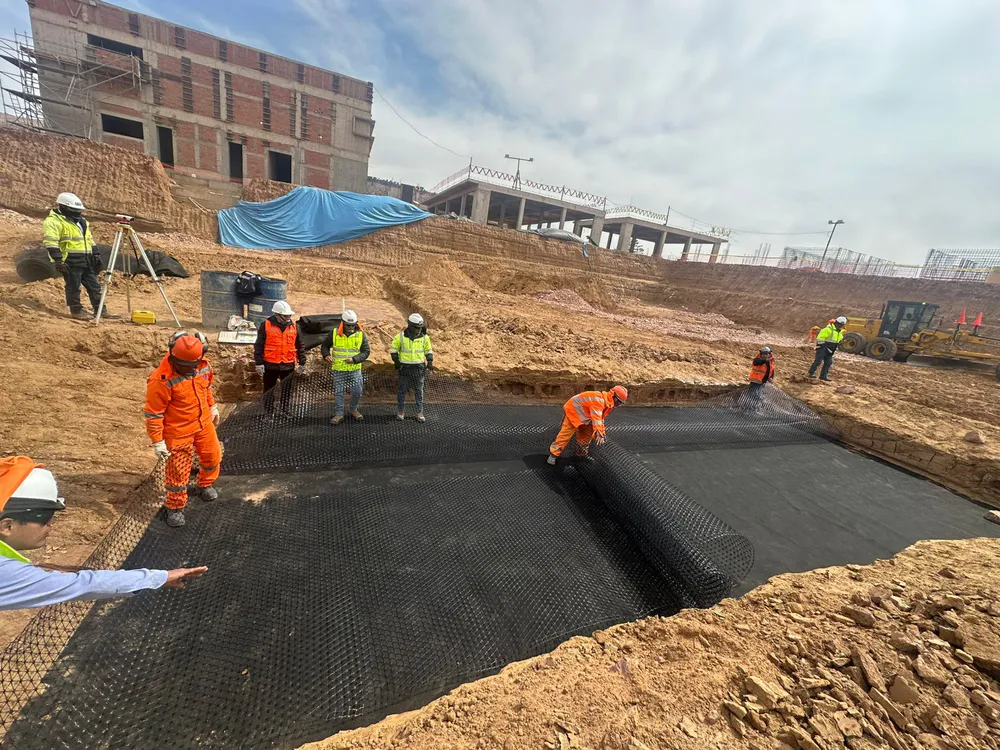
These flexible structures improved resistance against scour and reduced the risk of progressive erosion. The application of geosynthetics provided an efficient and rapidly installed solution in a highly vulnerable area.
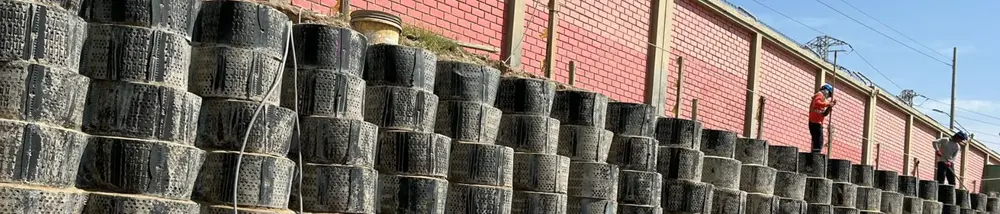
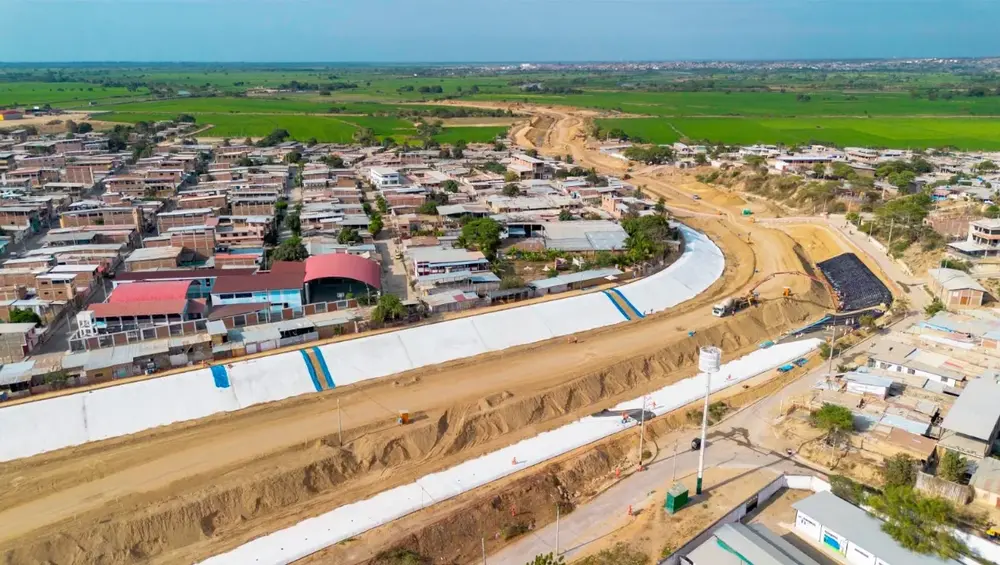
Within the framework of the Tumbes River Riverbank Protection Project – Package 2, the Authority for Reconstruction with Changes (ARCC) executed a strategic intervention in Quebrada Corrales through the construction of longitudinal and transverse dikes, aimed at reducing flood risk due to the activation of the ravine.
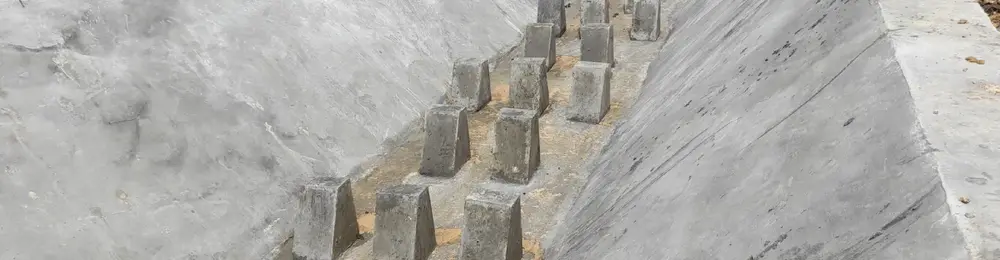
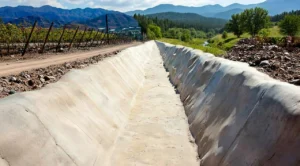
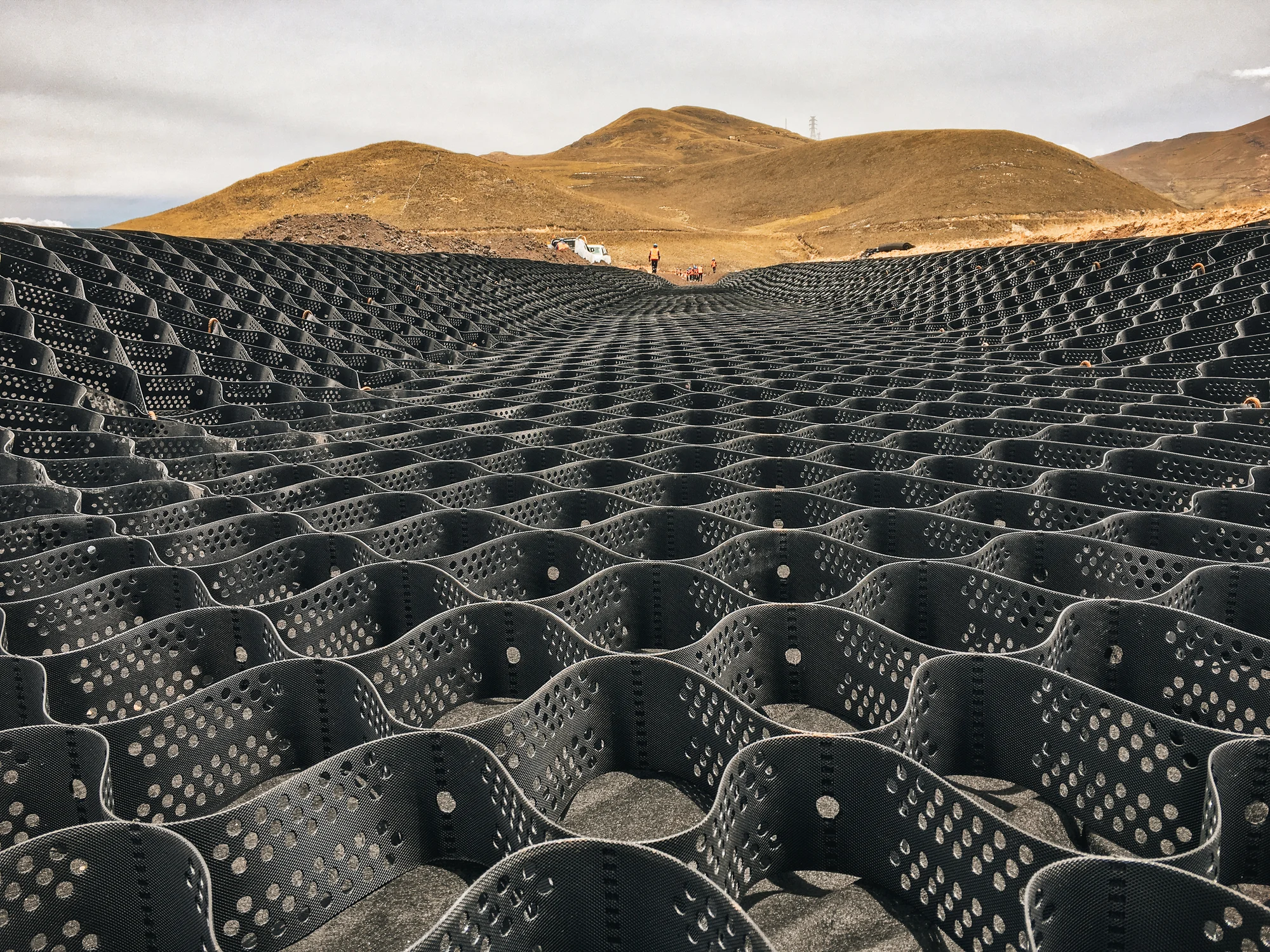
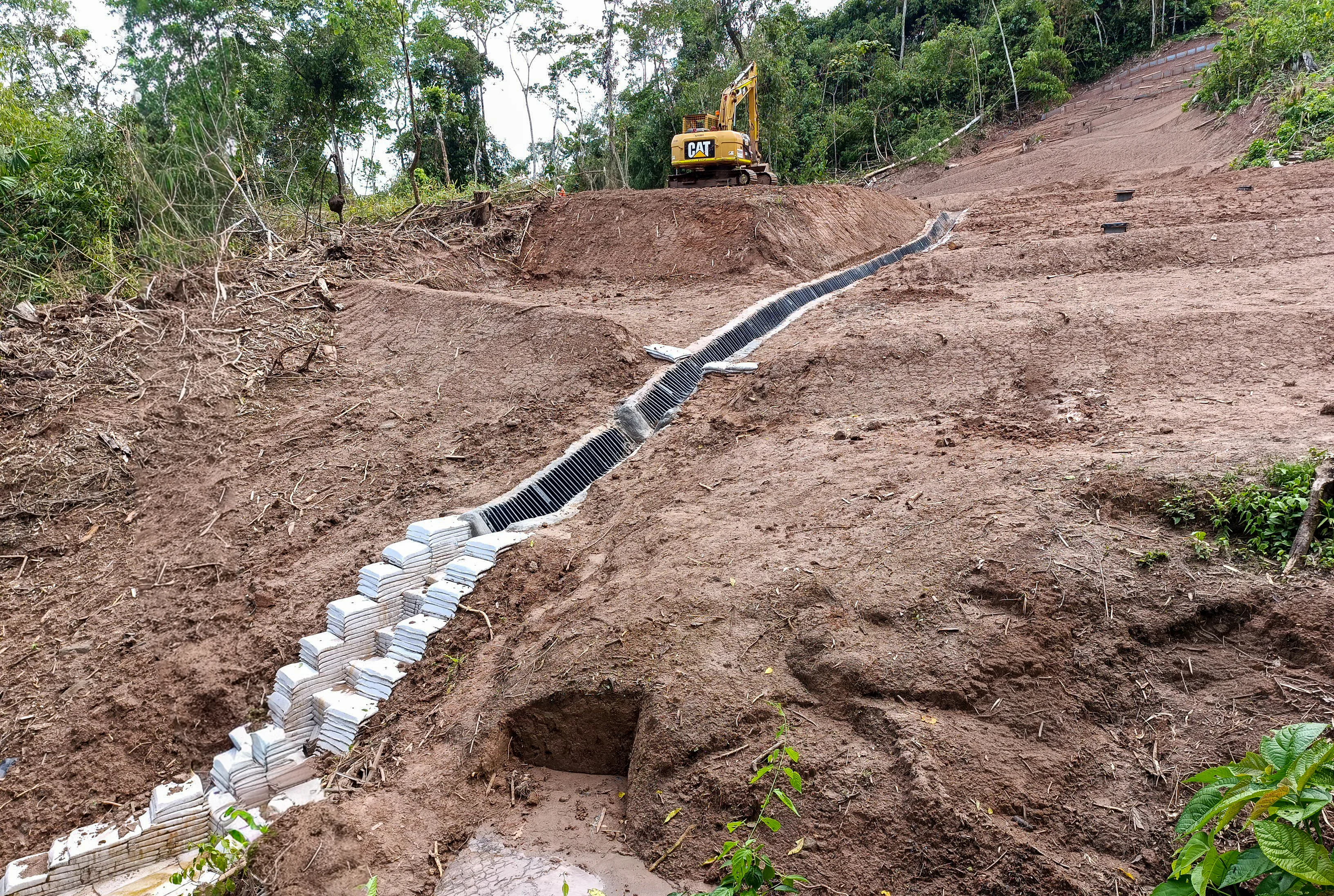
For this purpose, concrete-filled geocells were implemented on the slopes, along with Hydro-bags as an anti-scour solution, improving the stability of the hydraulic infrastructure.
This combination of technologies effectively protected more than 24,000 inhabitants and exposed agricultural areas, ensuring a robust technical solution adaptable to the geomorphological conditions of the zone. Additionally, the construction efficiency and resistance of geosynthetics contributed to safe, durable, and sustainable execution in the face of extreme climatic events.
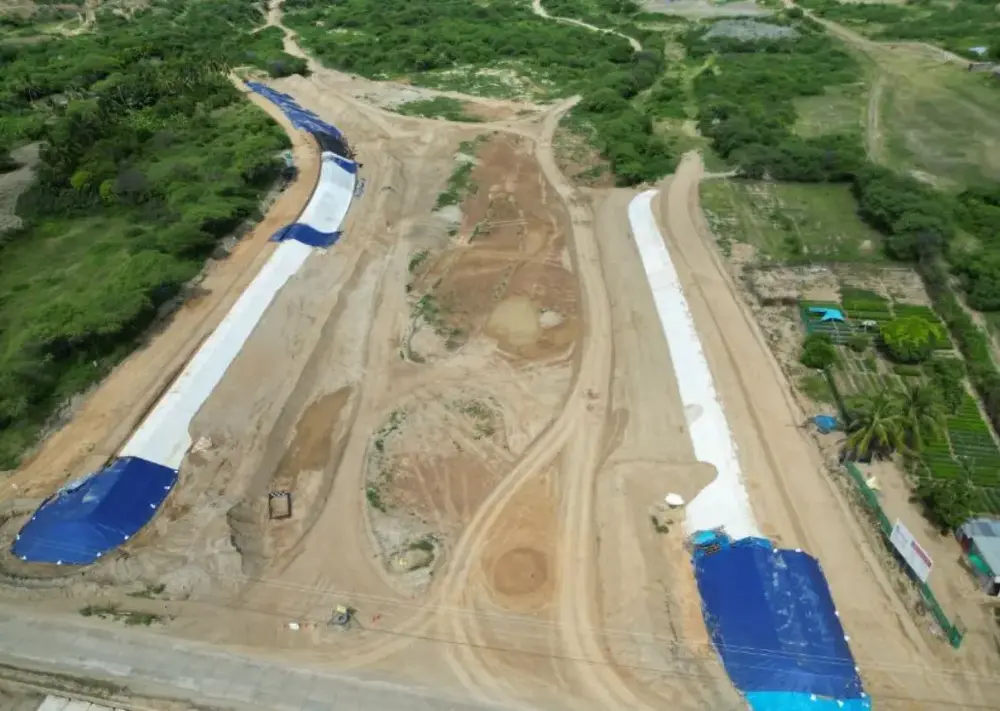
As part of the Tumbes River Riverbank Protection Project – Package 2, the Authority for Reconstruction with Changes (ARCC) executed the riverbank protection works at Quebrada La Jardina in the Tumbes region.
This strategic project included the construction of transverse and longitudinal dikes to protect more than 8,000 inhabitants and vulnerable agricultural areas from potential flooding caused by ravine activation.
To reinforce slope stability and mitigate scour effects, concrete-filled geocells and geobags were used as anti-scour solutions. These geosynthetic-based systems provided an efficient and rapidly deployable response in a zone of high hydraulic risk.
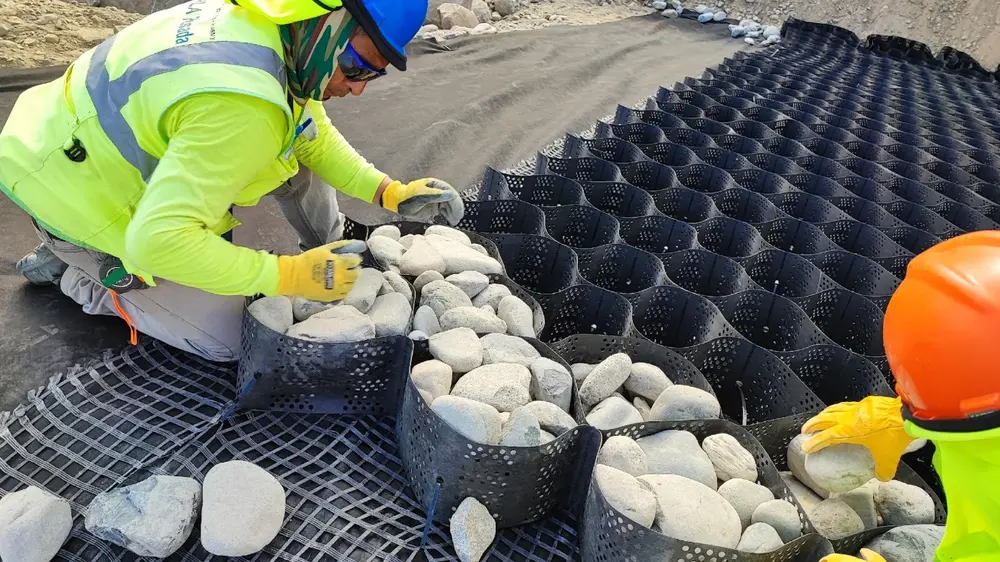
In response to the risks associated with ravine activation in the Áncash region, the National Infrastructure Authority (ANIN) executed riverbank protection works along the Casma and Huarmey rivers.
This intervention included the construction of longitudinal dikes aimed at safeguarding more than 38,000 inhabitants and extensive agricultural areas exposed to potential flooding.
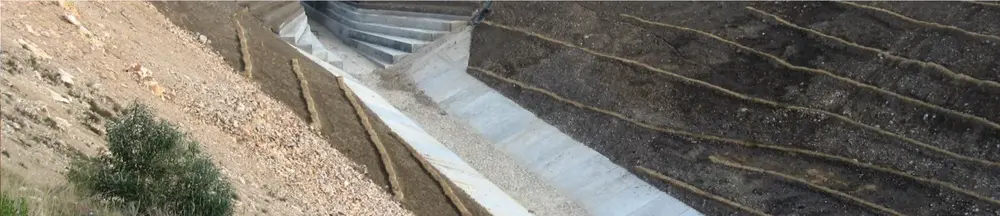
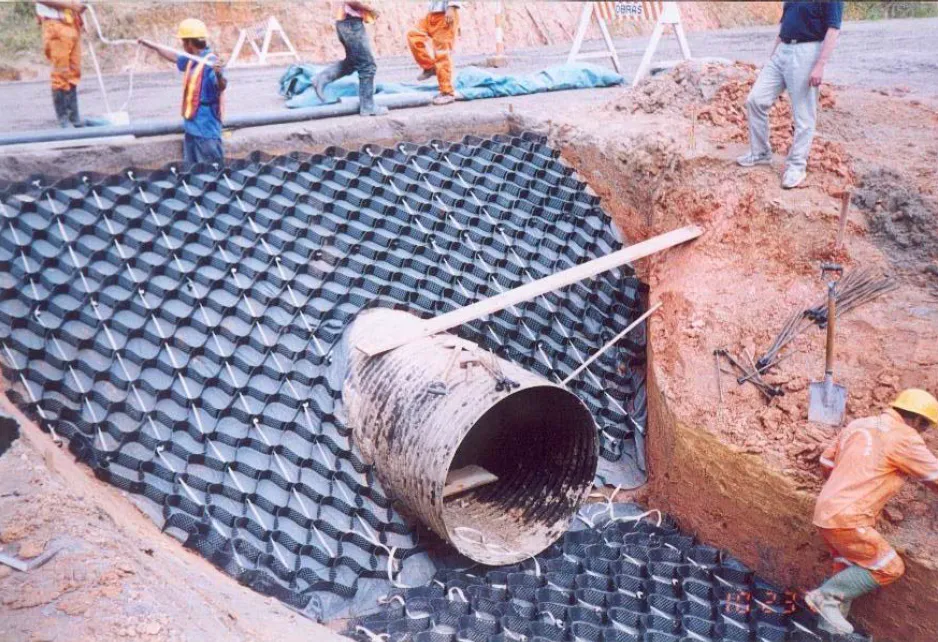
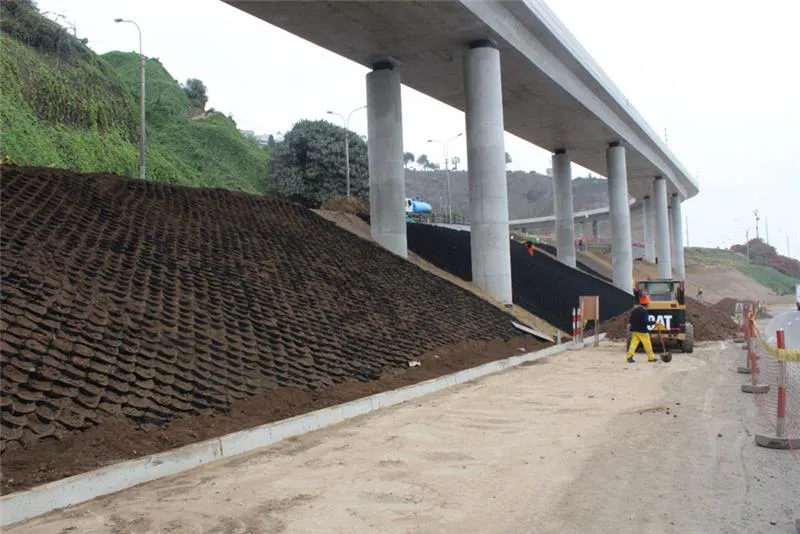
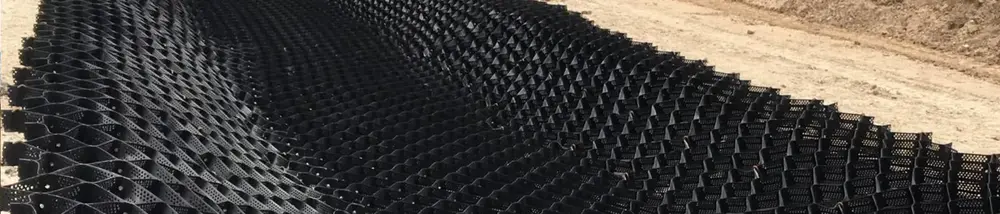
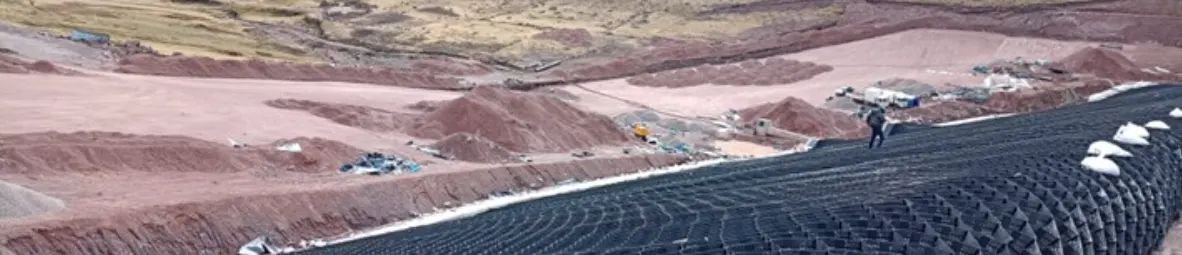
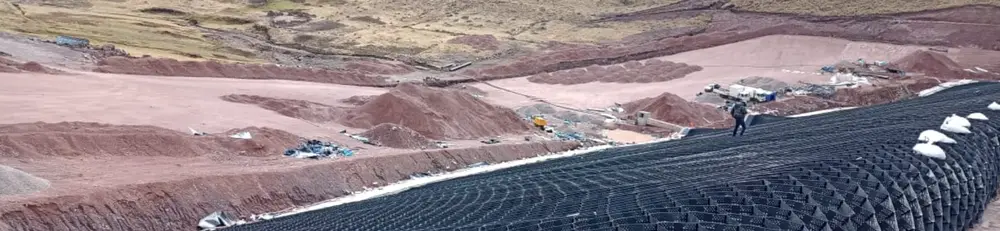
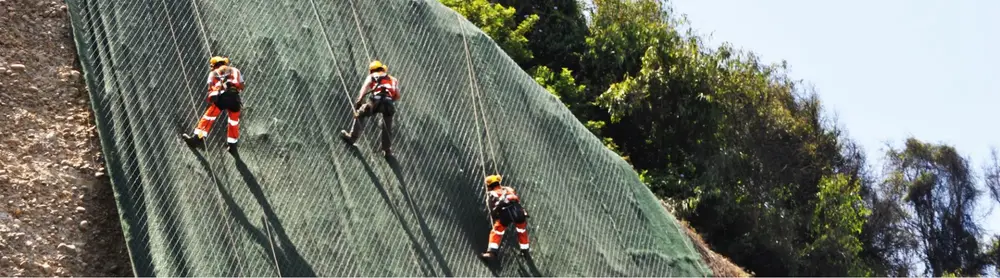
As part of the technical solution, geocells filled with granular material were implemented for slope protection. This geosynthetic solution enhanced riverbank stability, facilitated efficient installation, and provided a sustainable alternative to traditional construction methods in hydraulically active zones, utilizing locally available materials.
Along the section between Pueblo Nuevo and the La Palma intake, covering approximately 33 km on the left bank of the Zarumilla River, geosynthetic solutions were implemented to mitigate the effects of peak flood events.
Two applications were defined based on hydraulic conditions: the first consisted of geocells on the slope and geotextile bags at the anti-scour toe, while the second involved geotextile bags distributed along the entire slope.
These flexible structures improved resistance against scour and reduced the risk of progressive erosion. The application of geosynthetics provided an efficient and rapidly installed solution in a highly vulnerable area.
Within the framework of the Tumbes River Riverbank Protection Project – Package 2, the Authority for Reconstruction with Changes (ARCC) executed a strategic intervention in Quebrada Corrales through the construction of longitudinal and transverse dikes, aimed at reducing flood risk due to the activation of the ravine.
For this purpose, concrete-filled geocells were implemented on the slopes, along with Hydro-bags as an anti-scour solution, improving the stability of the hydraulic infrastructure.
This combination of technologies effectively protected more than 24,000 inhabitants and exposed agricultural areas, ensuring a robust technical solution adaptable to the geomorphological conditions of the zone. Additionally, the construction efficiency and resistance of geosynthetics contributed to safe, durable, and sustainable execution in the face of extreme climatic events.
As part of the Tumbes River Riverbank Protection Project – Package 2, the Authority for Reconstruction with Changes (ARCC) executed the riverbank protection works at Quebrada La Jardina in the Tumbes region.
This strategic project included the construction of transverse and longitudinal dikes to protect more than 8,000 inhabitants and vulnerable agricultural areas from potential flooding caused by ravine activation.
To reinforce slope stability and mitigate scour effects, concrete-filled geocells and geobags were used as anti-scour solutions. These geosynthetic-based systems provided an efficient and rapidly deployable response in a zone of high hydraulic risk.
In response to the risks associated with ravine activation in the Áncash region, the National Infrastructure Authority (ANIN) executed riverbank protection works along the Casma and Huarmey rivers.
This intervention included the construction of longitudinal dikes aimed at safeguarding more than 38,000 inhabitants and extensive agricultural areas exposed to potential flooding.
As part of the technical solution, geocells filled with granular material were implemented for slope protection. This geosynthetic solution enhanced riverbank stability, facilitated efficient installation, and provided a sustainable alternative to traditional construction methods in hydraulically active zones, utilizing locally available materials.
Our team of experts is ready to advise you and help you find the best option for your project.