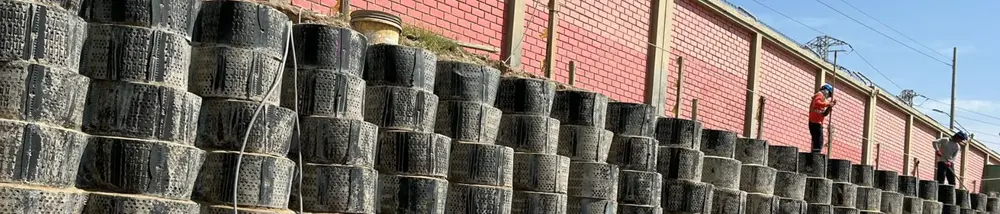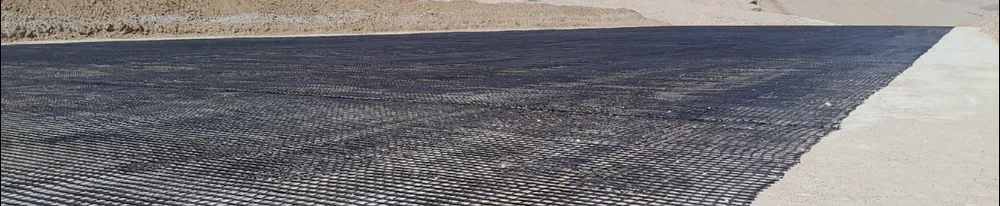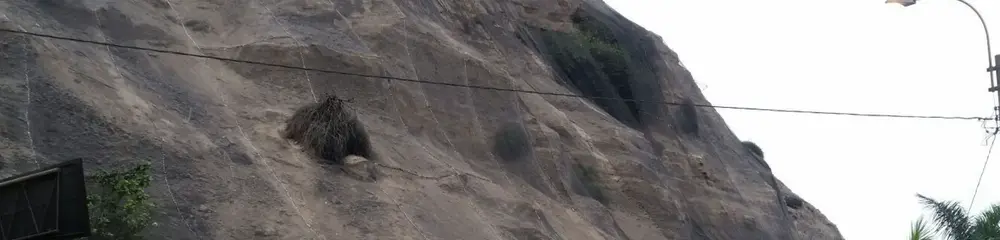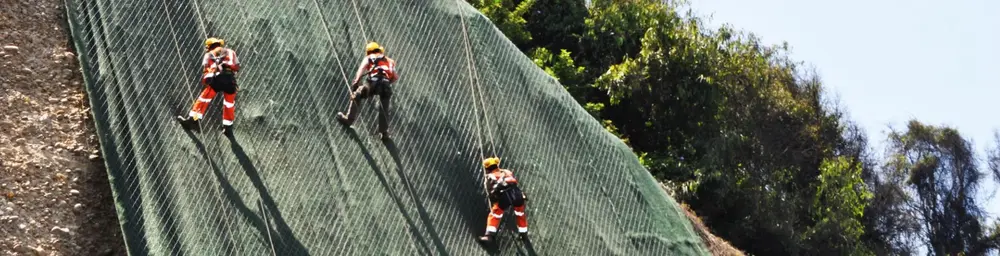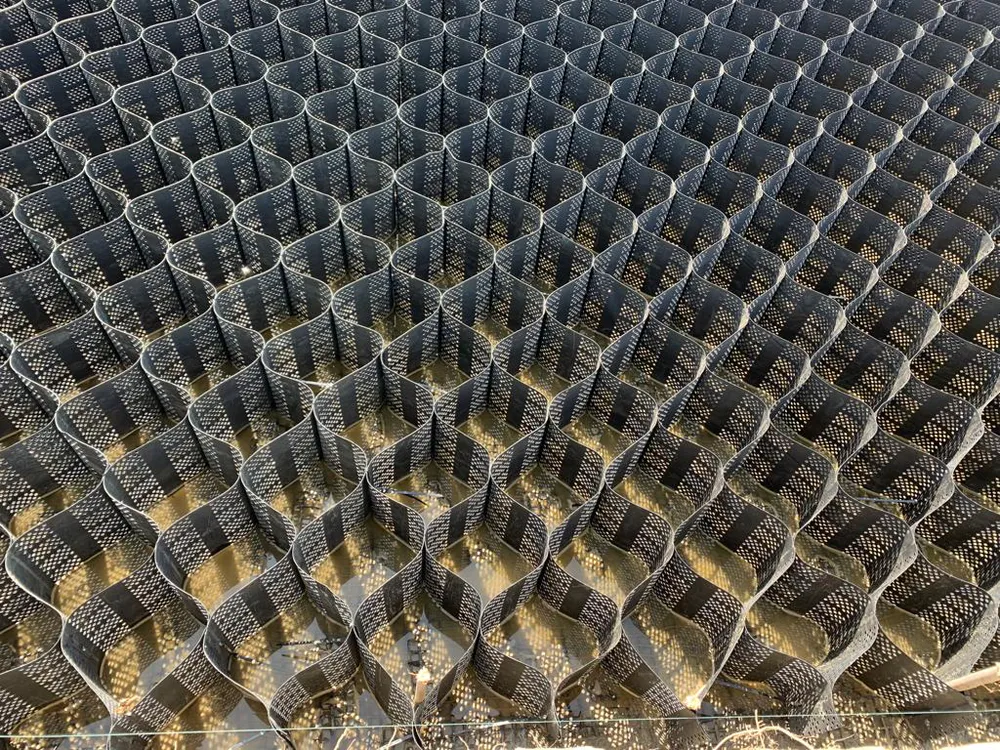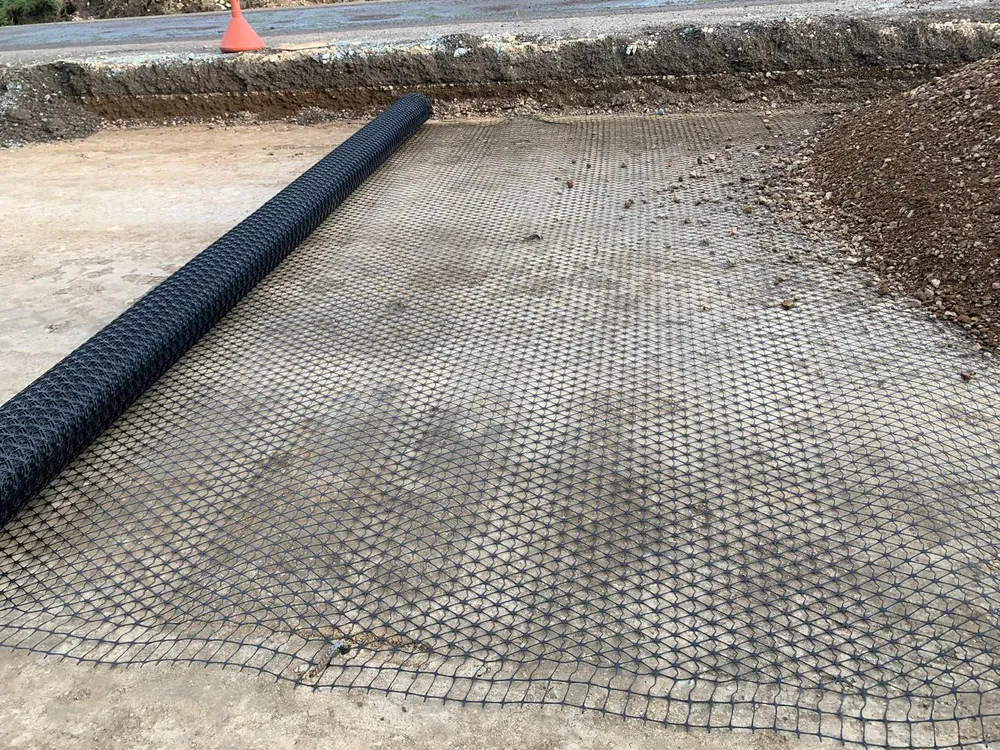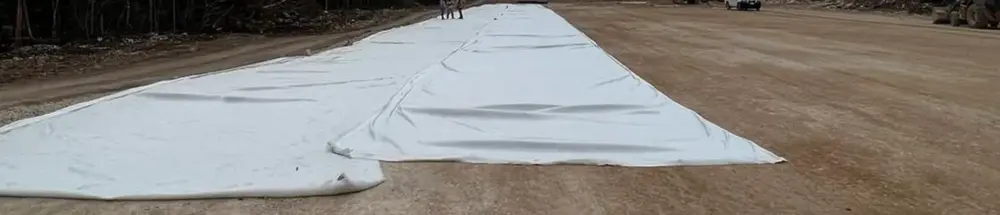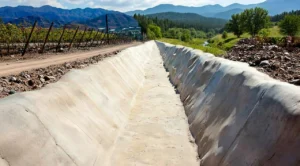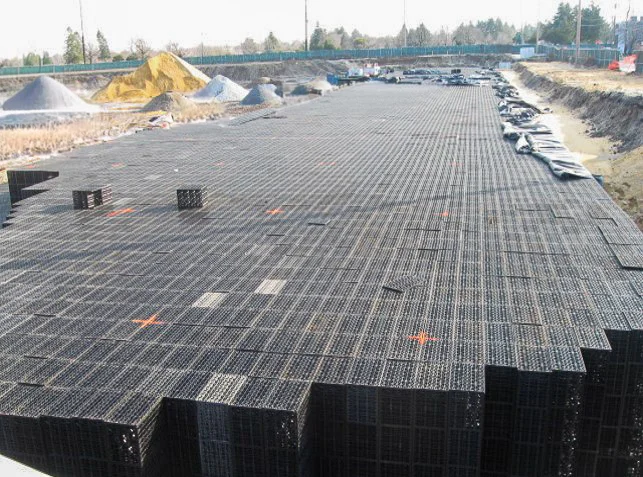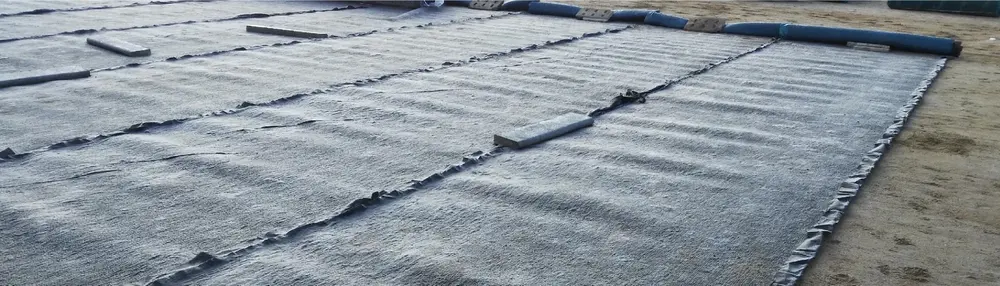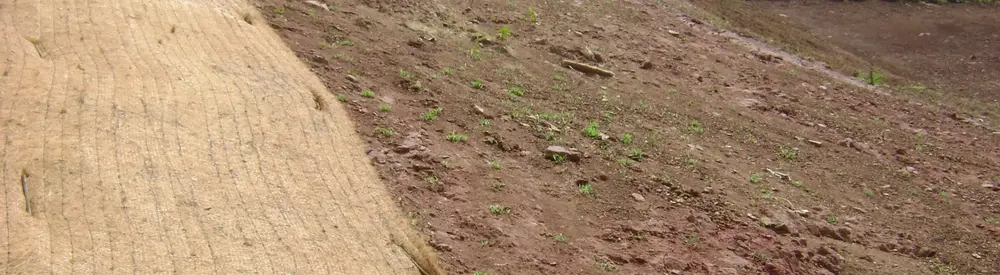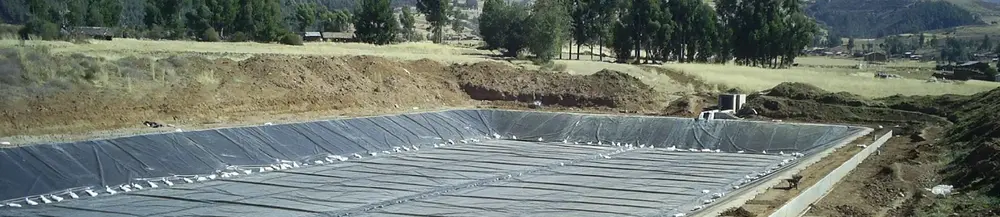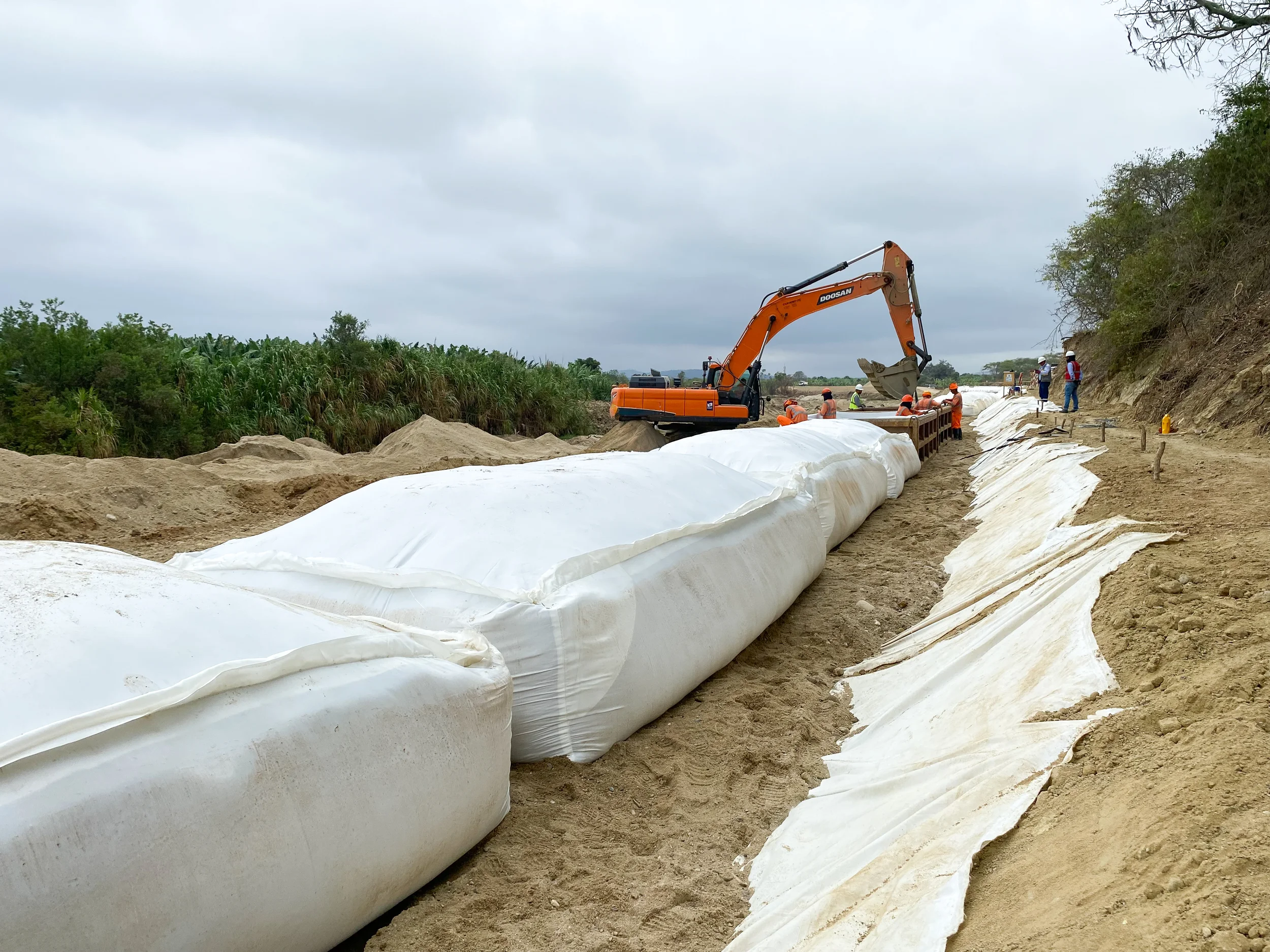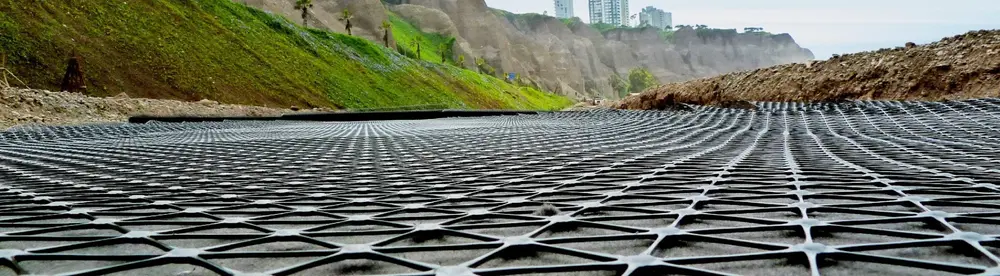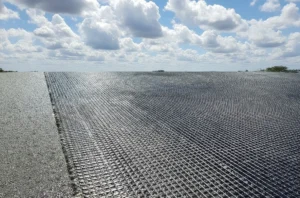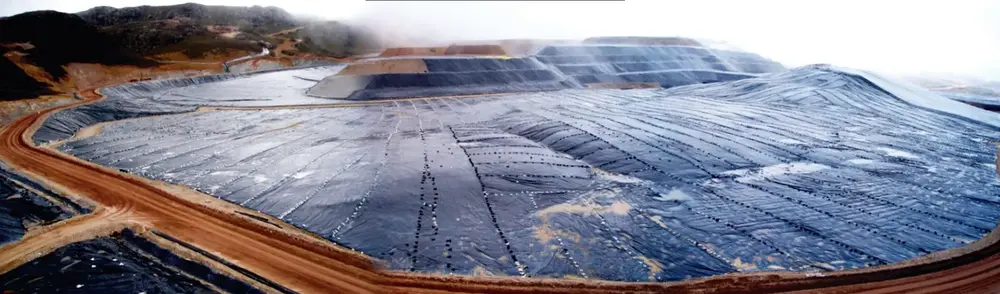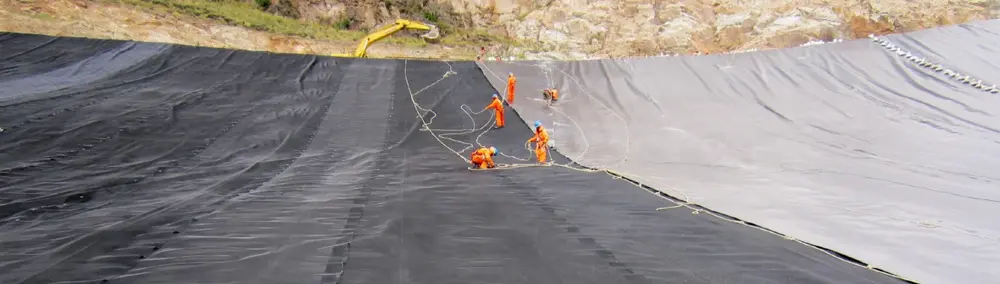

Woven geotextiles are permeable synthetic materials designed to interact with the soil and perform essential functions such as separation, filtration, drainage, reinforcement, and protection. Manufactured by interweaving polymer threads or tapes, they are customized to the mechanical and hydraulic properties required by each application.
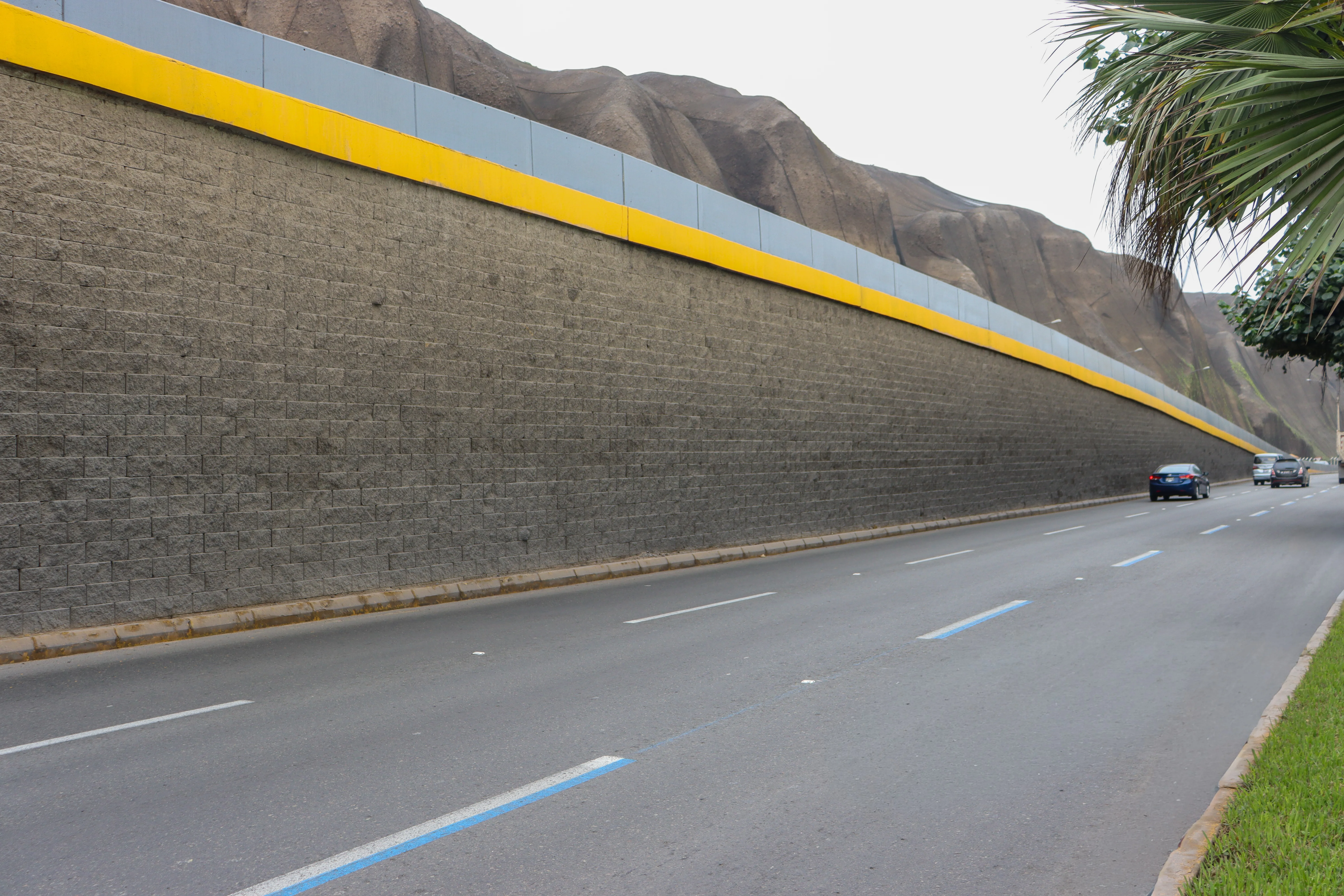
They offer high tensile strength, chemical stability, and durability in harsh environments, making them ideal solutions for critical infrastructure such as roads, railways, retaining walls, and erosion control.
Advantages / Benefits
High tensile strength: Its woven structure and molecular orientation of the polymer provide great load-bearing capacity, ideal for reinforcing roads, walls, and slopes.
Chemical durability: Resists degradation by acids, alkalis, and microorganisms, ensuring a long lifespan in aggressive soils.
UV stability (with additives): Extends its resistance to sunlight, crucial in exposed applications.
Controlled permeability: Allows water to pass through while retaining particles, promoting filtration and unobstructed drainage.
Lightness and ease of installation: Its low weight per square meter and roll presentation facilitate transport, cutting, and installation on site.
Cost-effectiveness: Compared to traditional materials (gravel, concrete), reduces material, transportation, and labor costs.
Sustainability: The use of recycled polymer and low-energy processes supports eco-friendly practices.
Applications
Work platforms
Improvement of road subgrades, railways, and airports.
Foundation reinforcement.
Road pavement optimization.
Crack mitigation systems in asphalt overlays.
Separation of material layers.
Reinforced soil walls.
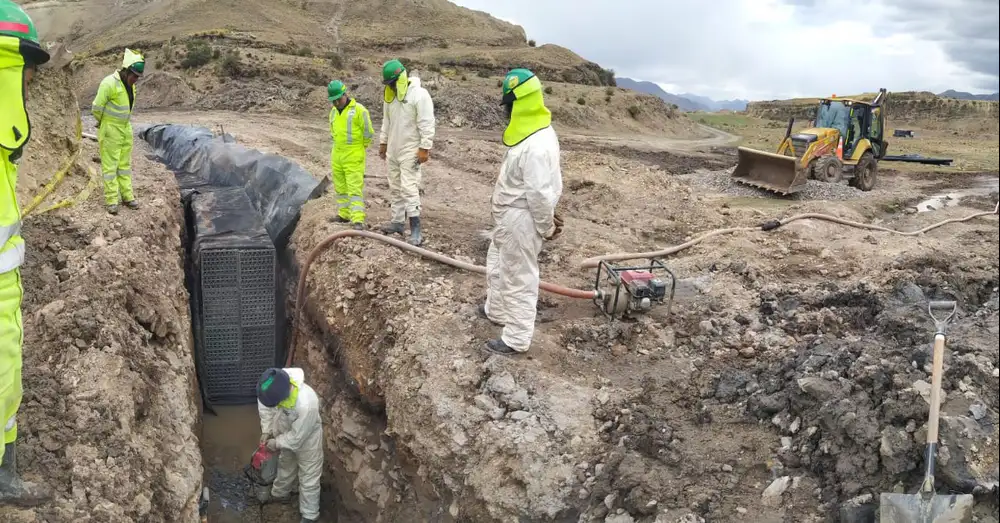
Filtration and drainage.
Erosion control.
Geosynthetic protection.
Application sectors
Mining
Roads
Railways
Ports and Airports
Urban Development
Hydraulic Works
Hydrocarbons
Mining
Roads
Railways
Ports and Airports
Urban Development
Hydraulic Works
Hydrocarbons
Mining
Roads
Railways
Ports and Airports
Urban Development
Hydraulic Works
Hydrocarbons
Some projects completed
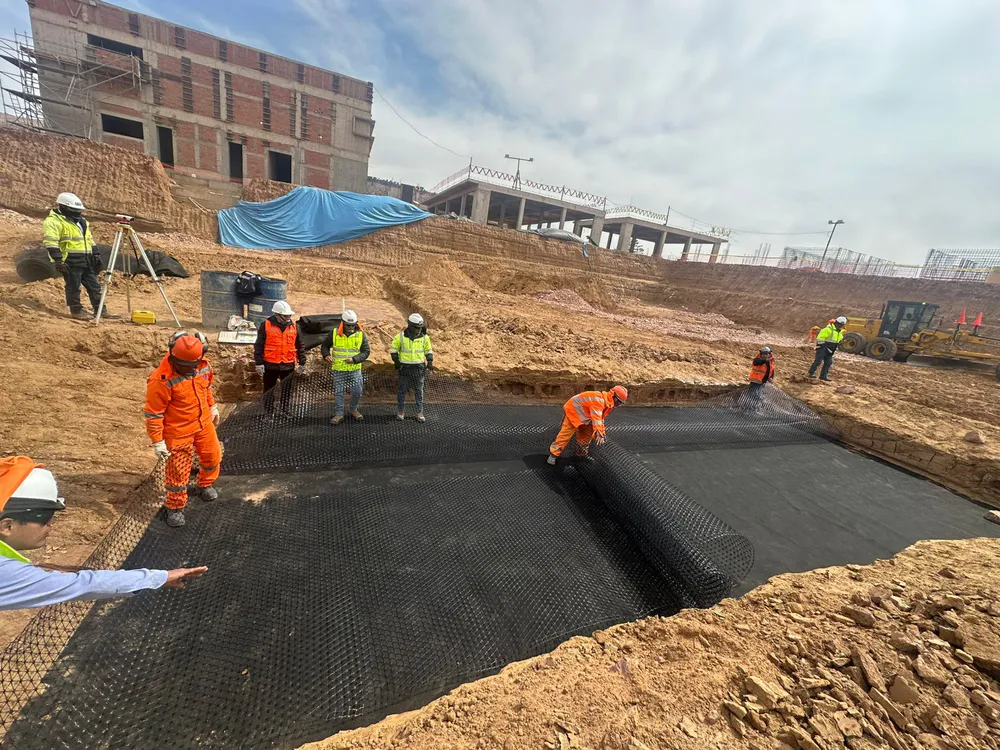
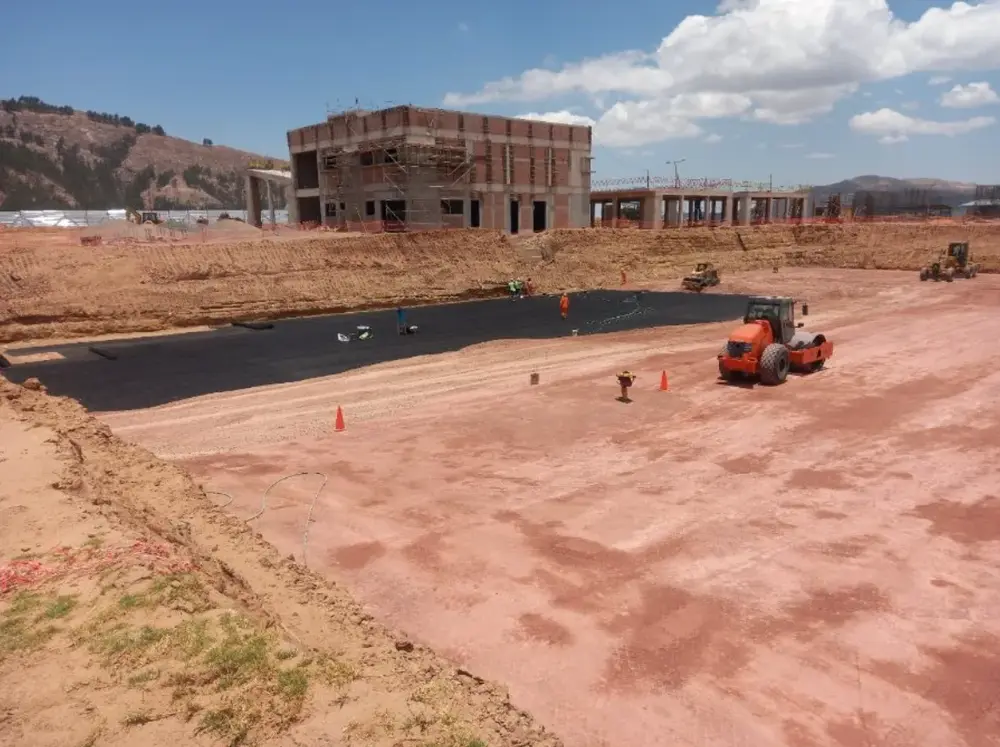
Improvement of the foundation of the Lucio Aldazabal Pauca Hospital - Huancané, Puno, Peru.
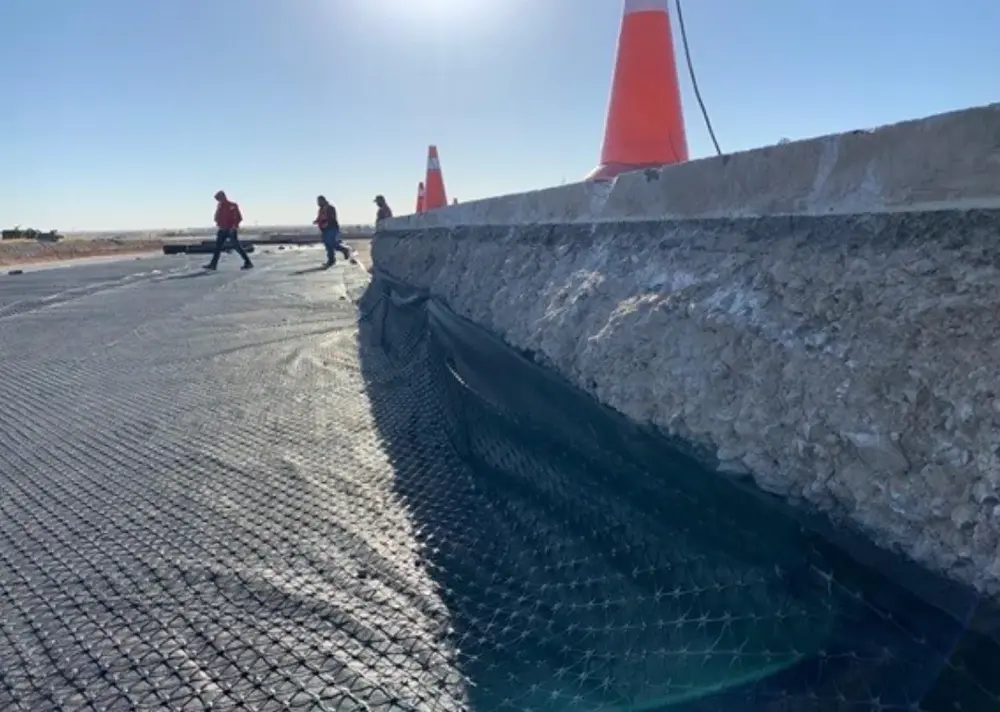
Subgrade Improvement at Tampico International Airport, Tamaulipas, Mexico
Improvement of the foundation of the Lucio Aldazabal Pauca Hospital - Huancané, Puno, Peru.
Subgrade Improvement at Tampico International Airport, Tamaulipas, Mexico
Improvement of the foundation of the Lucio Aldazabal Pauca Hospital - Huancané, Puno, Peru.
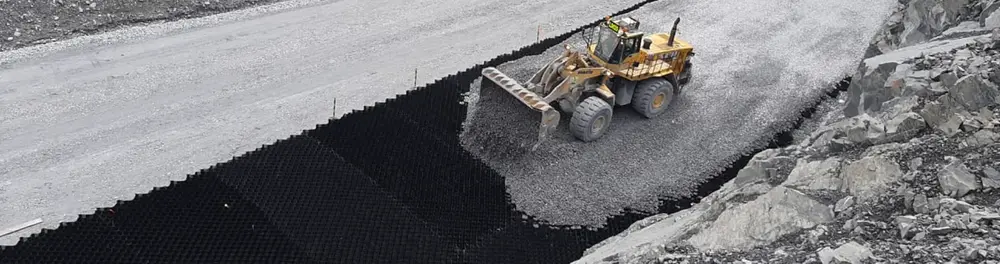
In the construction project for the new Lucio Aldazábal Pauca Hospital, a foundation soil with low load-bearing capacity was identified, insufficient to withstand the new structural stresses.
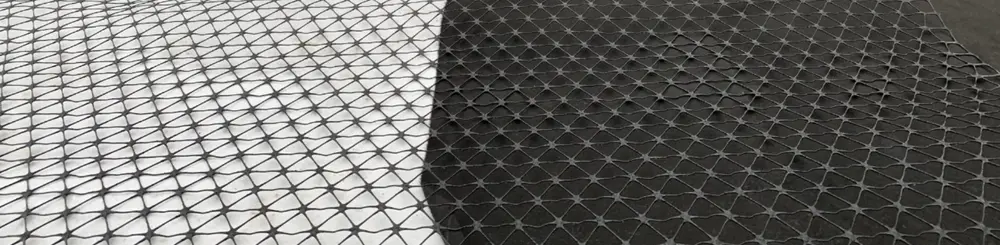
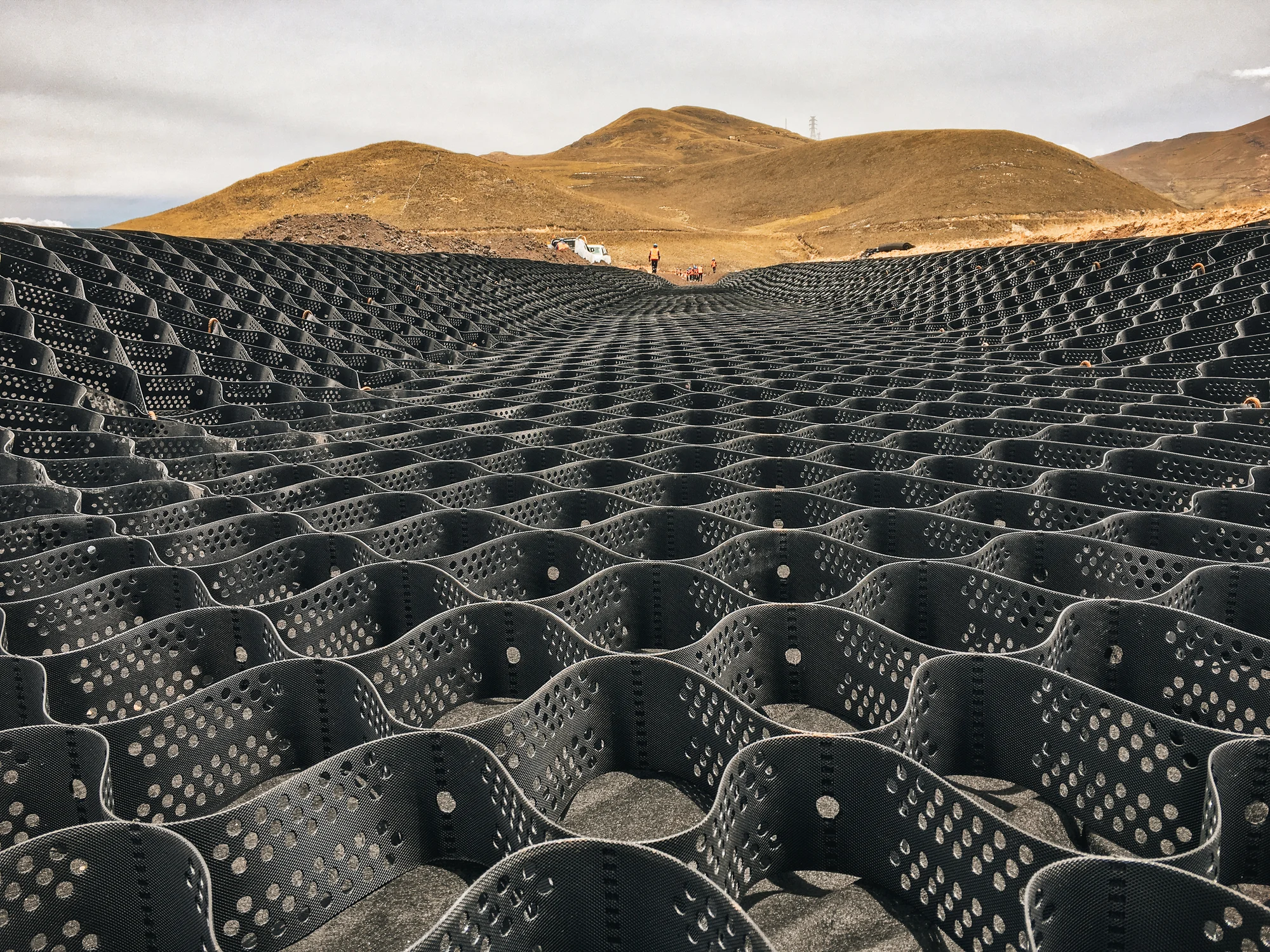
As a solution, the foundation was reinforced by incorporating granular material with geosynthetics, using T-6 multiaxial rigid geogrids. This intervention increased the soil’s shear strength and achieved the required load-bearing capacity, ensuring a solid and reliable foundation for the hospital.
Subgrade Improvement at Tampico International Airport, Tamaulipas, Mexico
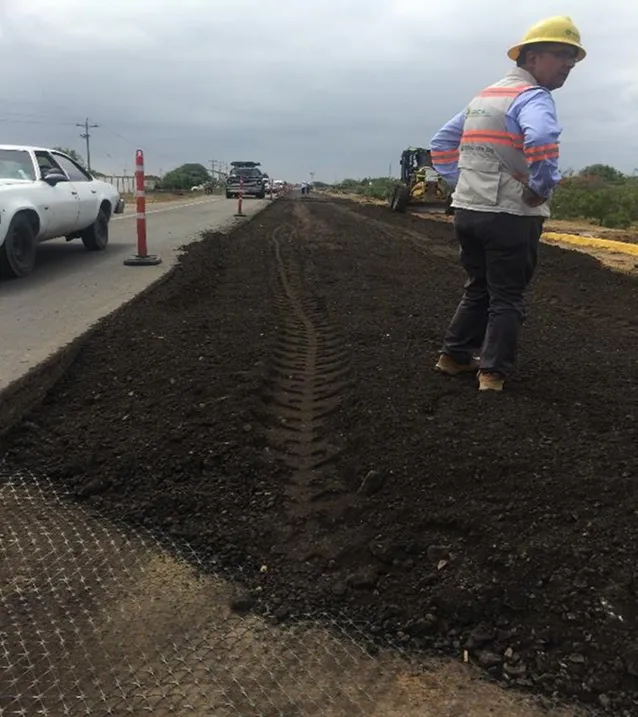
In the Tampico International Airport improvement project in Tamaulipas, Mexico, soft soils with low undrained shear strength were identified.
To address this geotechnical condition, a subgrade improvement system using geosynthetics was implemented, consisting of a nonwoven geotextile combined with a T-7 multiaxial geogrid. This solution reinforced the ground structure, increased its rigidity, and improved the performance of the airport infrastructure, ensuring a reliable and solid foundation.
Improvement of the foundation of the Lucio Aldazabal Pauca Hospital - Huancané, Puno, Peru.
In the construction project for the new Lucio Aldazábal Pauca Hospital, a foundation soil with low load-bearing capacity was identified, insufficient to withstand the new structural stresses.
As a solution, the foundation was reinforced by incorporating granular material with geosynthetics, using T-6 multiaxial rigid geogrids. This intervention increased the soil’s shear strength and achieved the required load-bearing capacity, ensuring a solid and reliable foundation for the hospital.
Subgrade Improvement at Tampico International Airport, Tamaulipas, Mexico
In the Tampico International Airport improvement project in Tamaulipas, Mexico, soft soils with low undrained shear strength were identified.
To address this geotechnical condition, a subgrade improvement system using geosynthetics was implemented, consisting of a nonwoven geotextile combined with a T-7 multiaxial geogrid. This solution reinforced the ground structure, increased its rigidity, and improved the performance of the airport infrastructure, ensuring a reliable and solid foundation.
Need advice?
Our team of experts is ready to advise you and help you find the best option for your project.
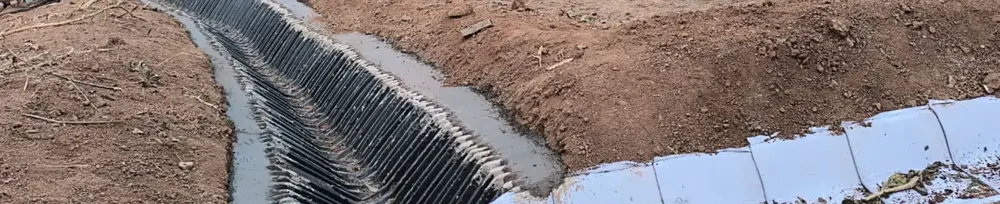
Success stories
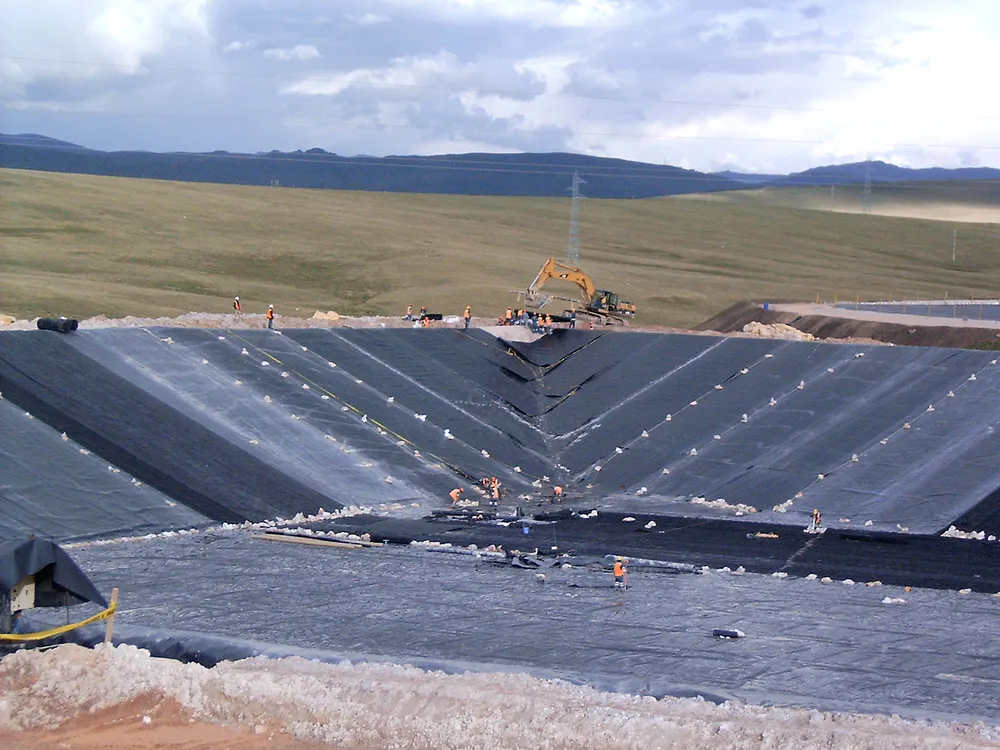
Leaching pads – Geomembranes – La Libertad, Peru.
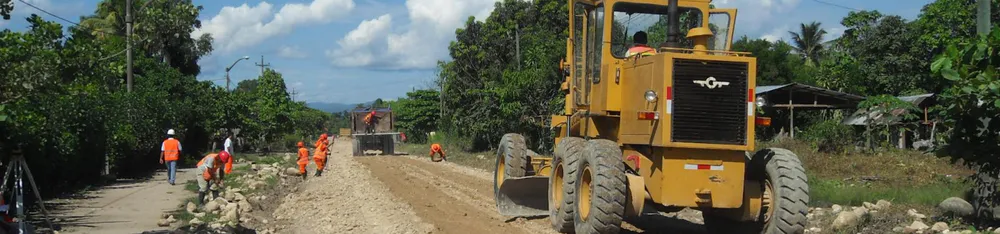
The waterproofing of the Lagunas Norte leach pad has completed Phase 2, a project TDM has been carrying out since Phase 0. The total ore volume at the end of...
We were at Arminera, one of the most important events in the Argentine mining sector, presenting our engineering solutions with geosynthetics, applied to the main challenges of mining projects. We...
The waterproofing of the Lagunas Norte leach pad has completed Phase 2, a project TDM has been carrying out since Phase 0. The total ore volume at the end of...
We were at Arminera, one of the most important events in the Argentine mining sector, presenting our engineering solutions with geosynthetics, applied to the main challenges of mining projects. We...