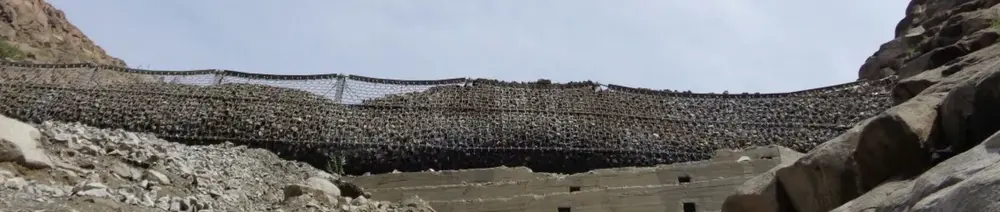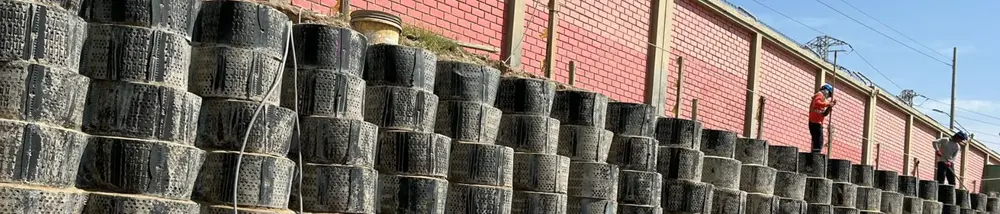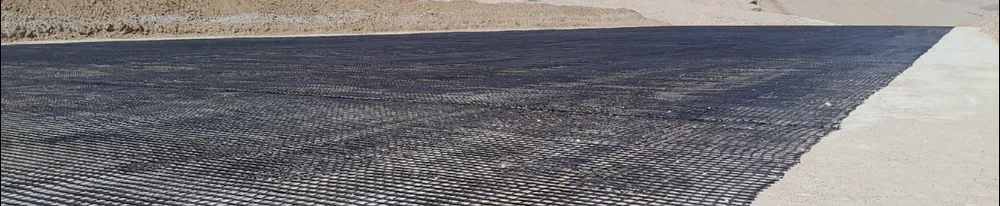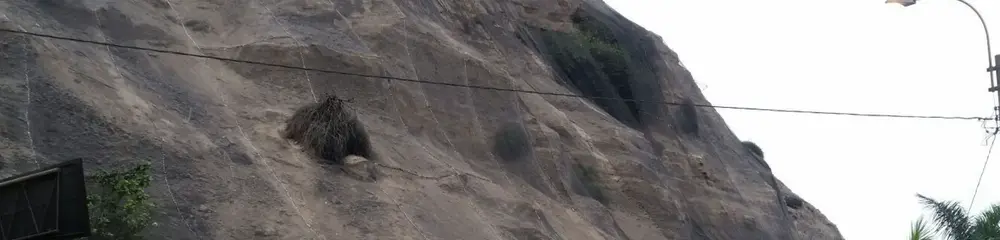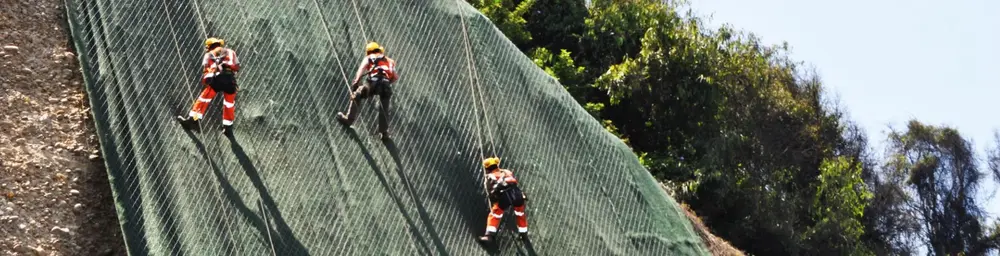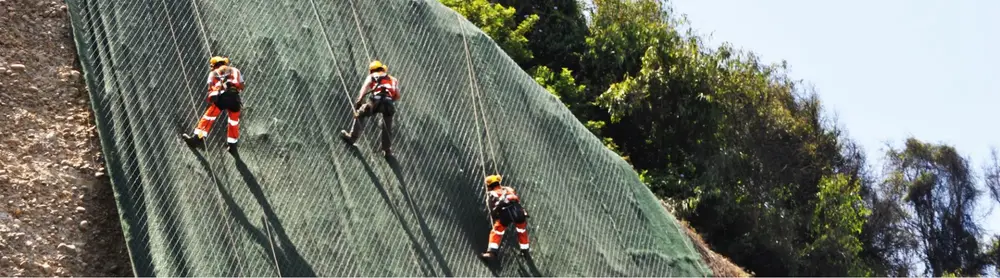
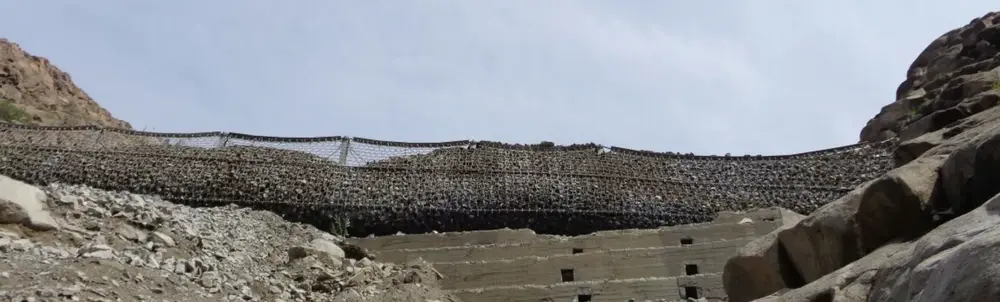


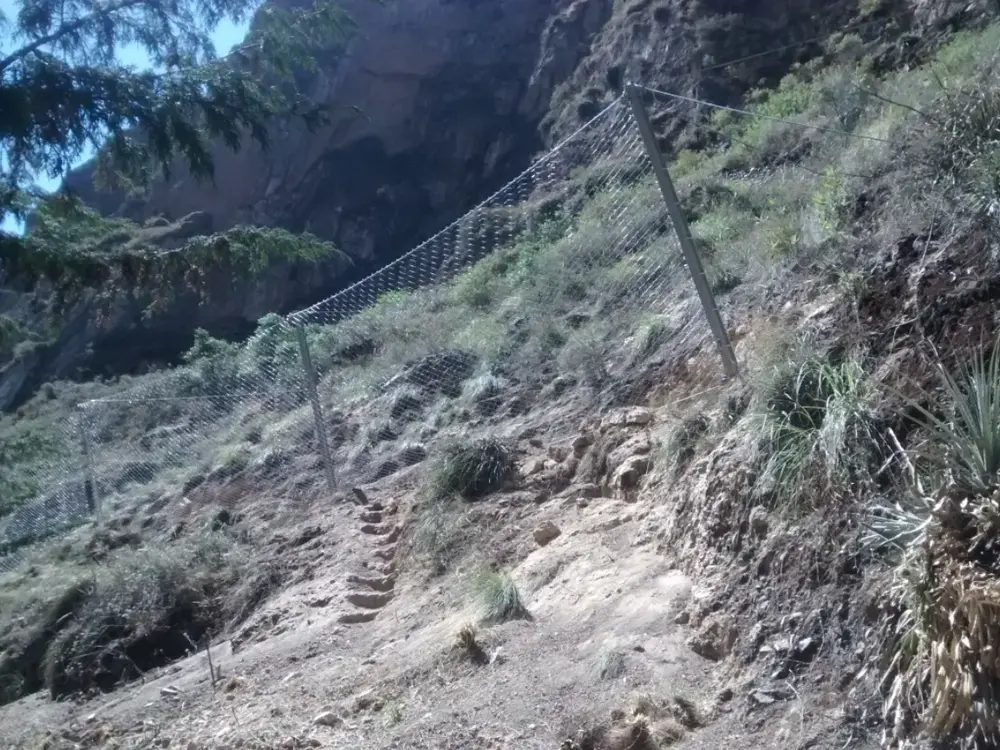
To minimize geological risks at Backus’ San Mateo industrial plant, a dynamic rockfall barrier system was implemented.
These flexible structures, comprised of high-strength steel mesh, flexible poles, and energy-dissipating elements, were designed to withstand high-magnitude impacts, ensuring the system’s structural integrity and operational continuity.
Their preventive installation reinforced personnel safety, efficiently adapted to the rocky terrain, and prevented more invasive interventions, establishing themselves as a flexible and reliable alternative to rockfall scenarios.
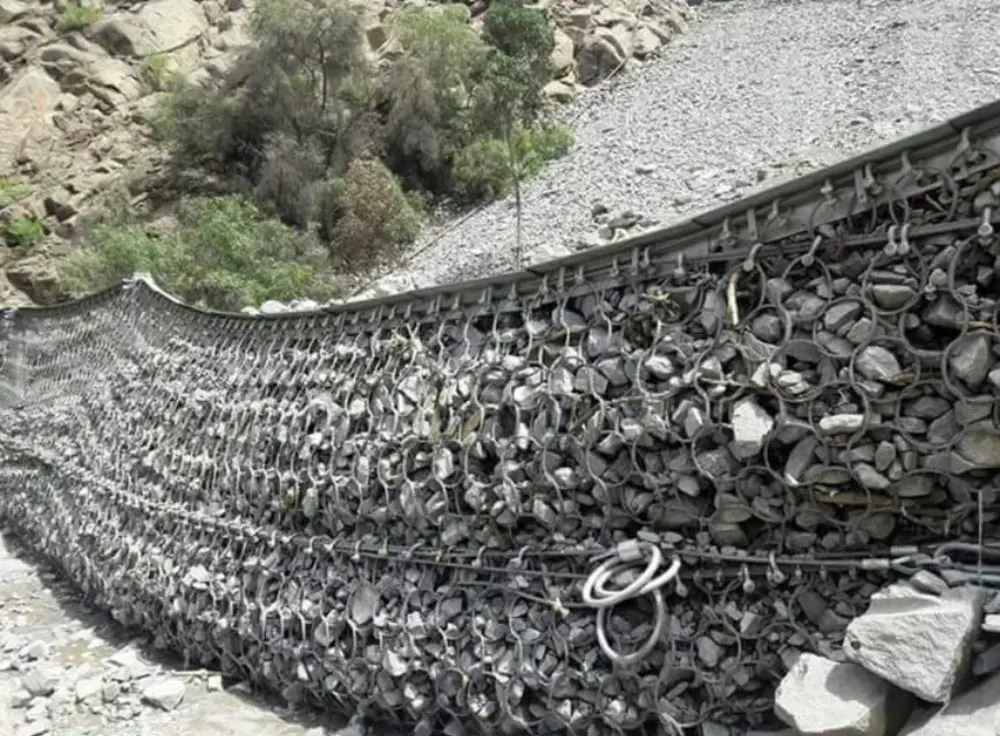
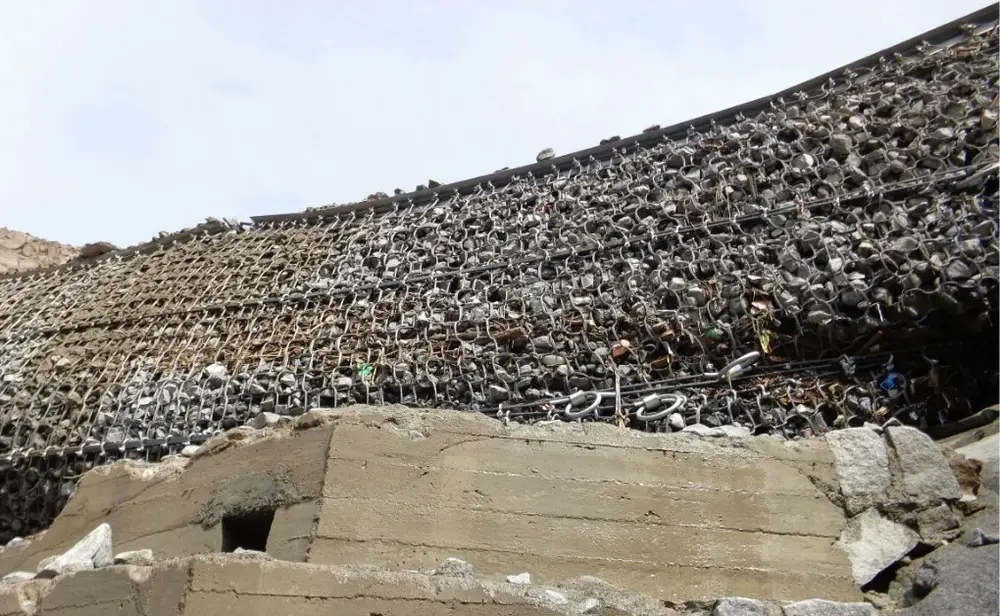
As part of a mitigation project led by the National Water Authority (ANA), dynamic barriers were installed in the Carosio Ravine, located in Lurigancho-Chosica, Lima, Peru, with the objective of controlling debris flows and mudslides.
These flexible structures, composed of high-strength steel ring nets and energy dissipation systems, were designed to efficiently intercept mud, rocks, and sediments, providing direct protection to downstream communities.
In addition to their high effectiveness, this solution demonstrated significant cost savings compared to conventional systems, positioning itself as a technically viable and sustainable strategy for natural disaster risk management in vulnerable intervention areas.
To minimize geological risks at Backus’ San Mateo industrial plant, a dynamic rockfall barrier system was implemented.
These flexible structures, comprised of high-strength steel mesh, flexible poles, and energy-dissipating elements, were designed to withstand high-magnitude impacts, ensuring the system’s structural integrity and operational continuity.
Their preventive installation reinforced personnel safety, efficiently adapted to the rocky terrain, and prevented more invasive interventions, establishing themselves as a flexible and reliable alternative to rockfall scenarios.
As part of a mitigation project led by the National Water Authority (ANA), dynamic barriers were installed in the Carosio Ravine, located in Lurigancho-Chosica, Lima, Peru, with the objective of controlling debris flows and mudslides.
These flexible structures, composed of high-strength steel ring nets and energy dissipation systems, were designed to efficiently intercept mud, rocks, and sediments, providing direct protection to downstream communities.
In addition to their high effectiveness, this solution demonstrated significant cost savings compared to conventional systems, positioning itself as a technically viable and sustainable strategy for natural disaster risk management in vulnerable intervention areas.
Our team of experts is ready to advise you and help you find the best option for your project.