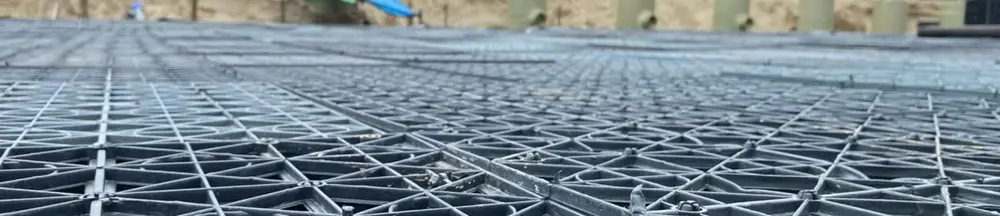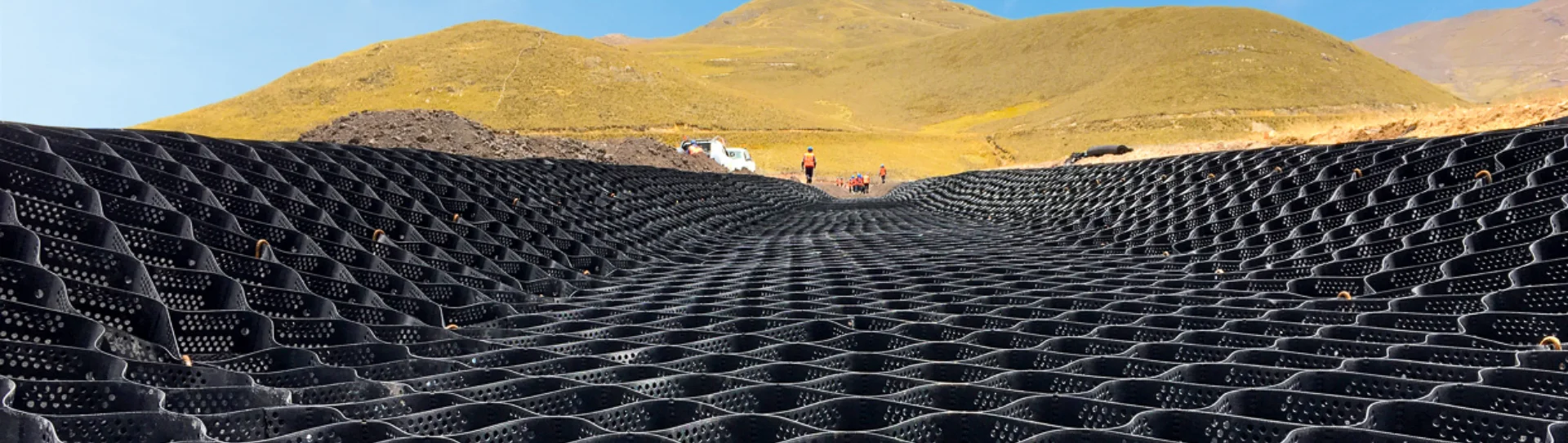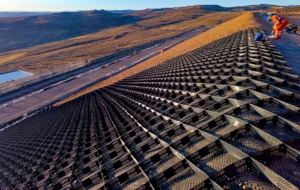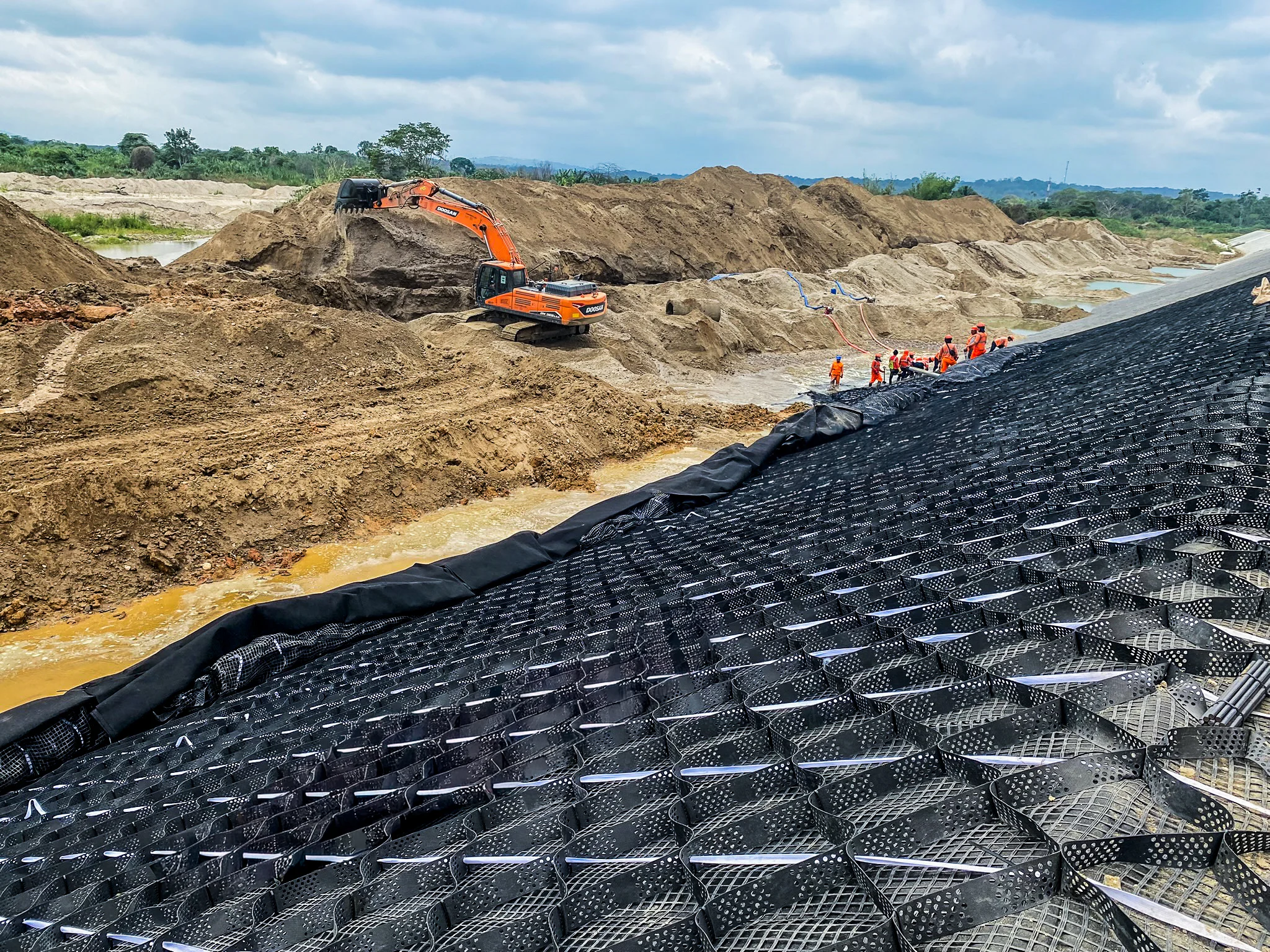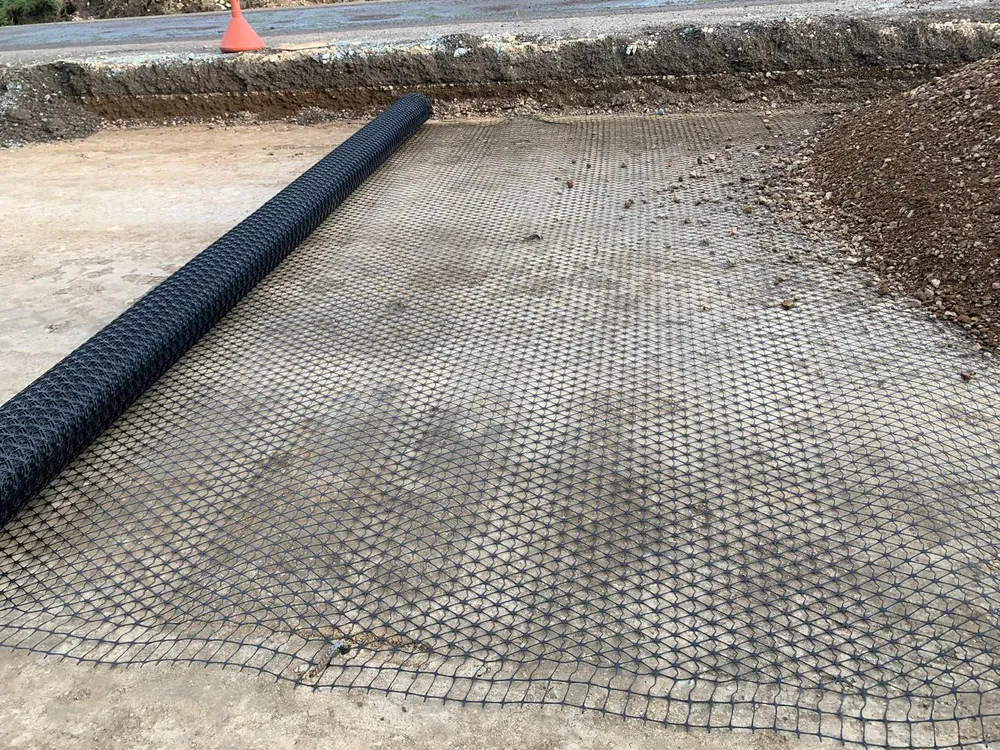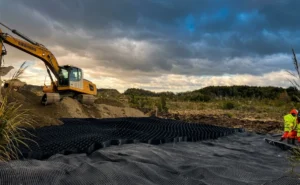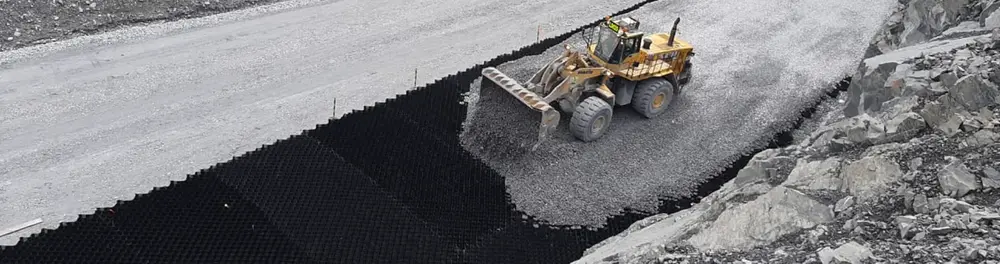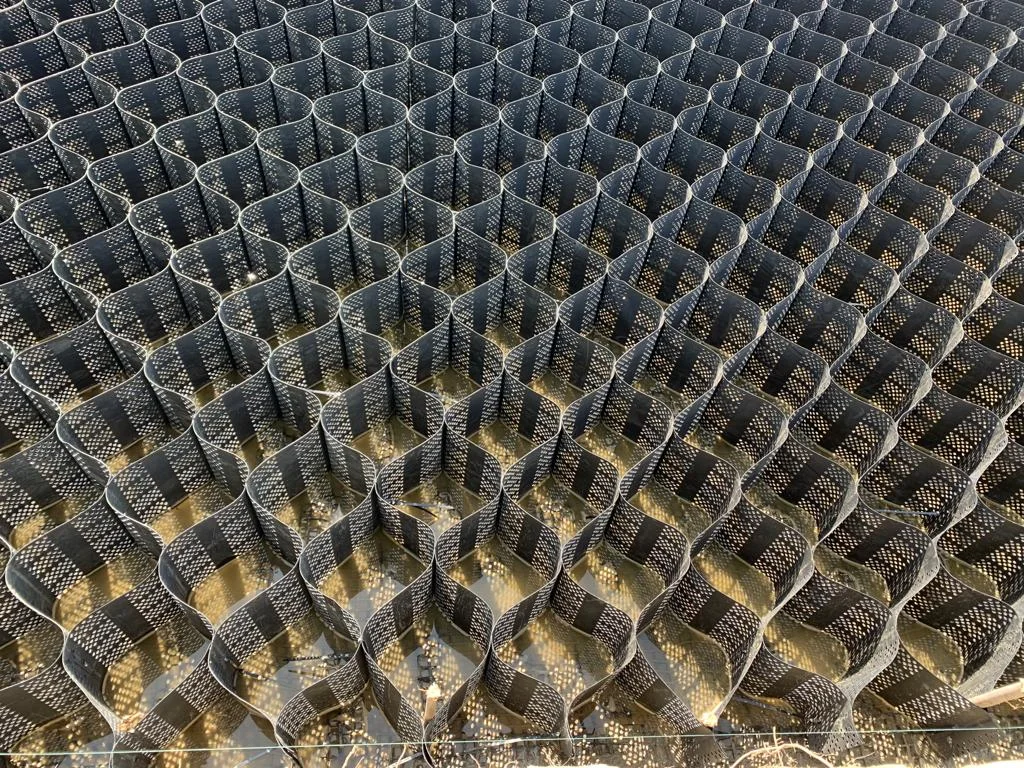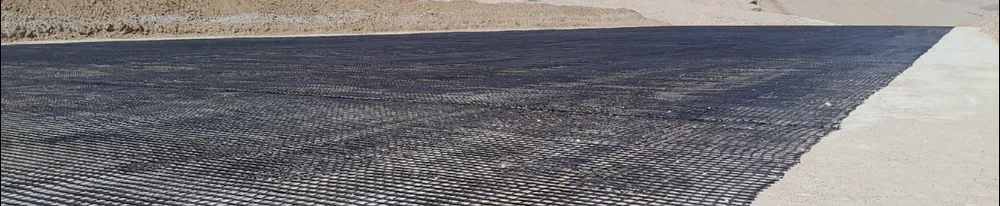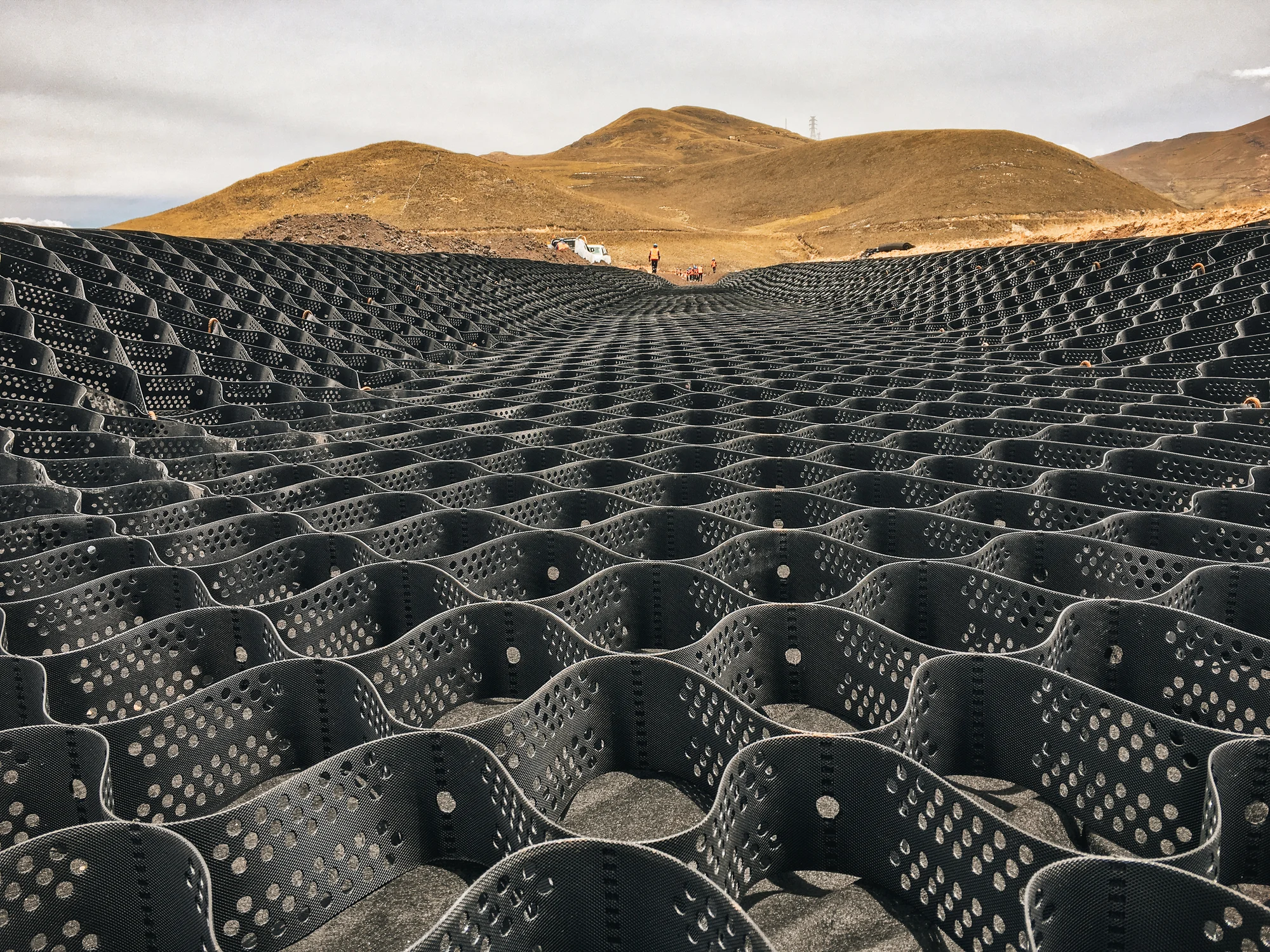
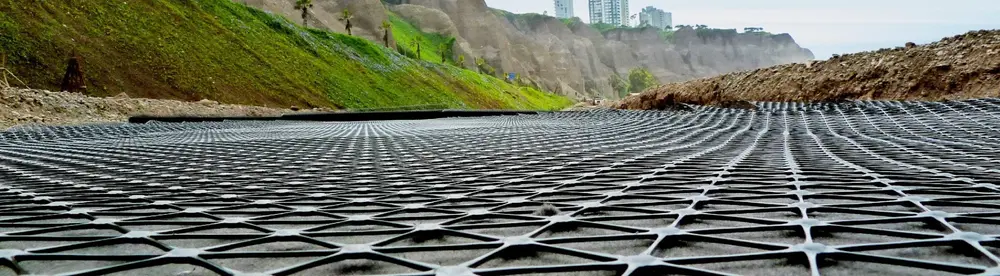
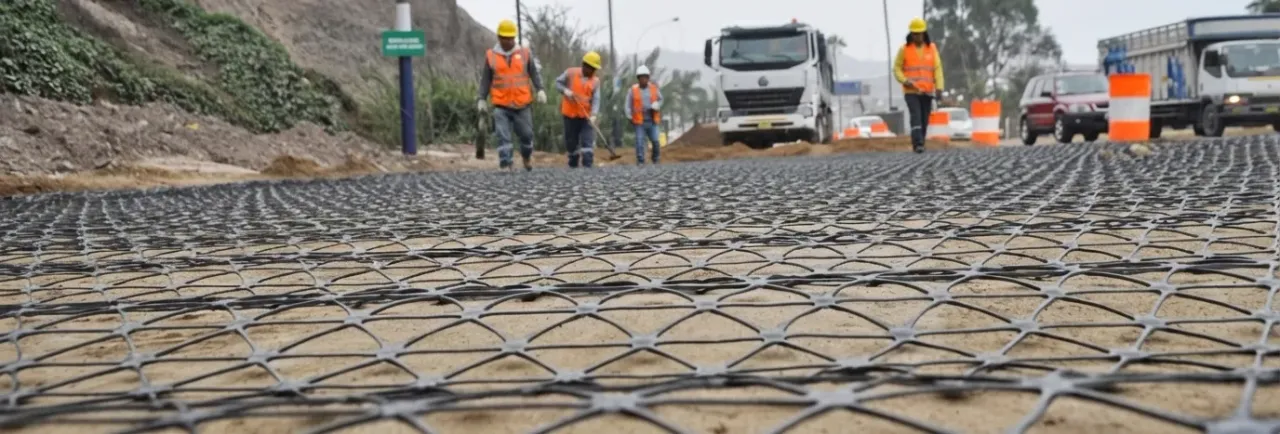
Geogrids are geosynthetics composed of a network of interconnected ribs with regularly spaced openings that facilitate bonding with the soil. They play a key role in reinforcement, enabling soil improvement, subgrade stabilization, asphalt resurfacing, and the construction of reinforced retaining structures. Depending on their structure, geogrids can be biaxial, multiaxial, or uniaxial, and are manufactured from polyethylene, polypropylene, polyester, or a composite of fiberglass and elastomeric polymers.
They are also classified as extruded or woven, according to their manufacturing process. Extruded geogrids are high-strength geosynthetics made from polypropylene resins through extrusion, punching, and stretching processes (uniaxial, biaxial, or multiaxial). Its lattice design, with regular openings—square, rectangular or triangular—increases load-bearing capacity, reduces settlements and stabilizes the soil by transferring stresses through its interconnection and tensile strength.
Advantages
Road Structure Optimization: Geogrids allow for a reduction in the base layer of roads and highways, significantly decreasing quarrying costs, construction time, and maintenance.
Longer Road Lifespan: They considerably extend the durability of roads, railways, and reinforced roads.
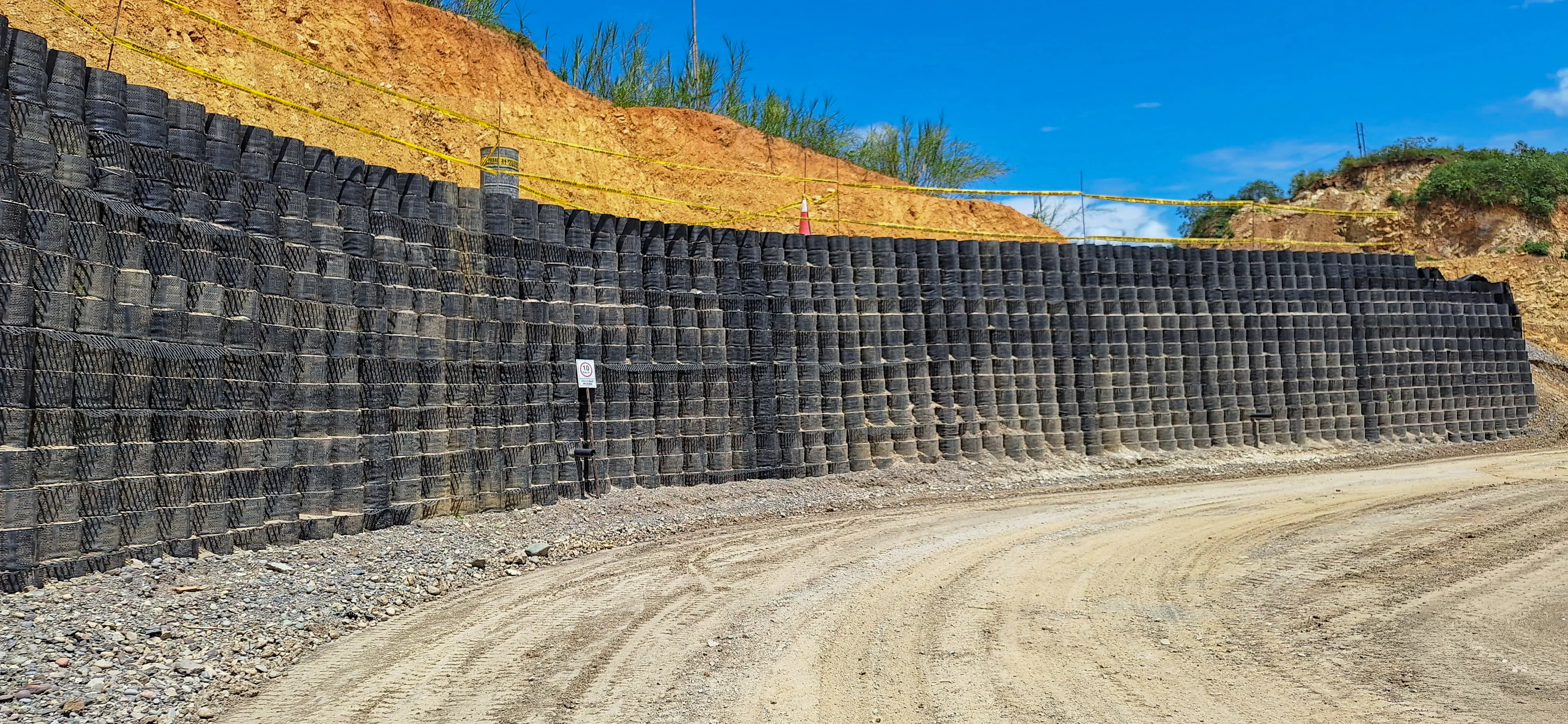
Versatility in Containment Design: They facilitate the construction of structures with greater angles of repose, optimizing space and stability.
High Mechanical Performance: High tensile strength and excellent soil-geogrid interaction (interlocking) ensure greater structural efficiency.
Improved Load Distribution: They promote a uniform distribution of loads, minimizing deformation and settlement.
Superior Durability: High environmental resistance to degradation factors such as humidity, temperature, and chemical agents.
Reduced Costs and Materials: They decrease the need for traditional materials, generating economic savings and environmental benefits.
Ease of Installation and Sustainability: Quick and easy installation with a reduced environmental impact.
Resistance to cyclic loads: They maintain their performance against repetitive loads, ideal for high traffic infrastructures.
Applications
Work Platforms
Subgrade Improvement for Roads, Railways, and Airports
Foundation Reinforcement
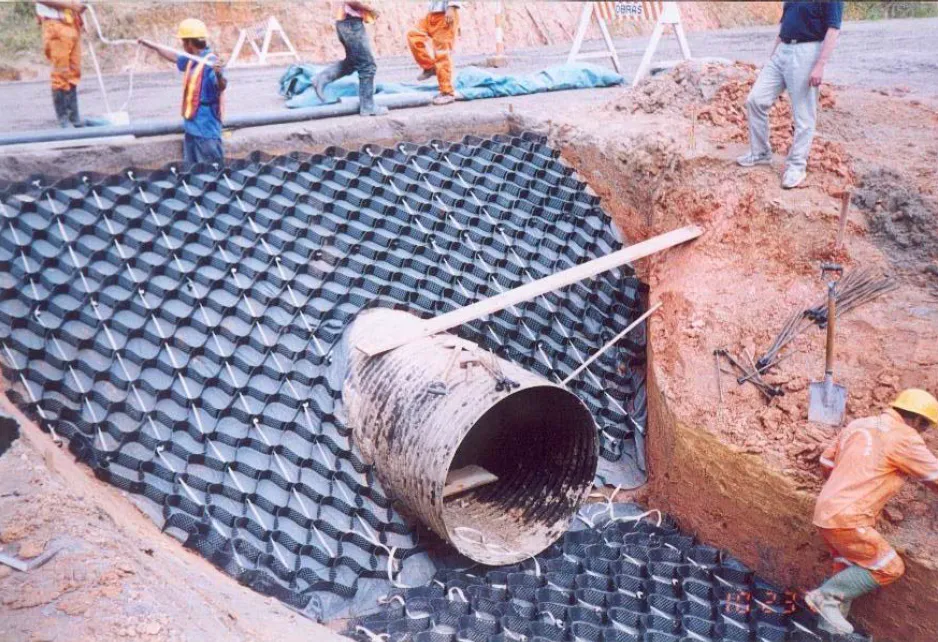
Underground Interference Protection Systems
Soil Liquefaction Mitigation Systems
Road Pavement Optimization
Cracking Mitigation Systems for Asphalt Overlays
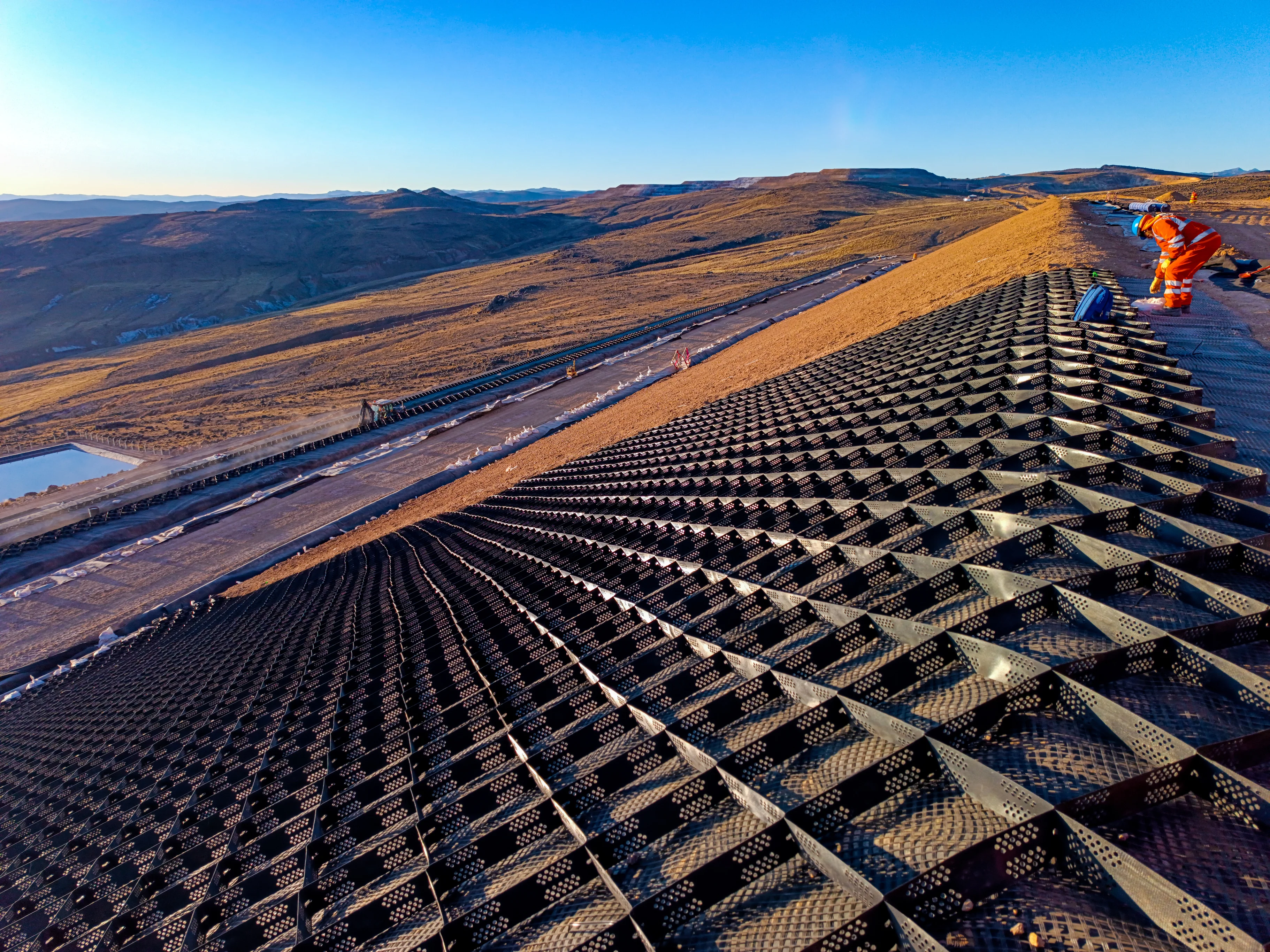
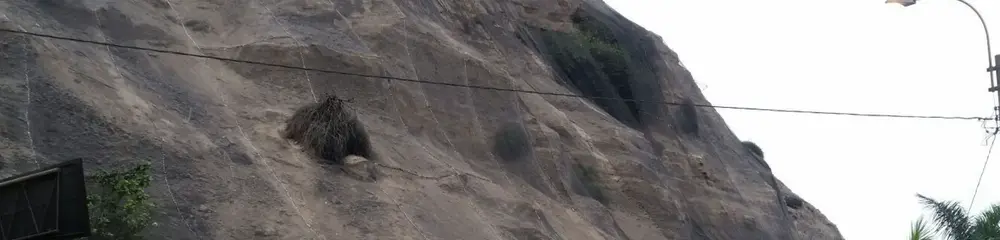
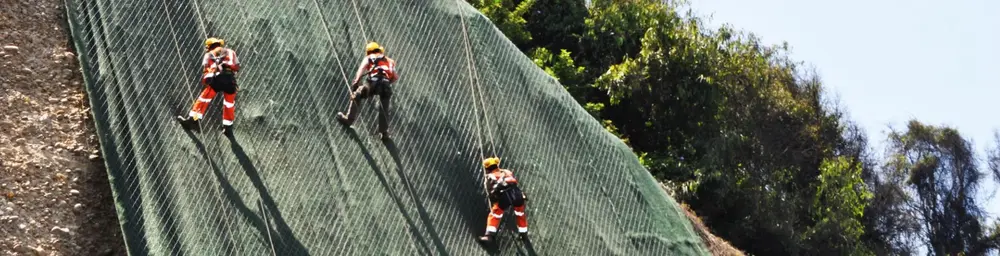
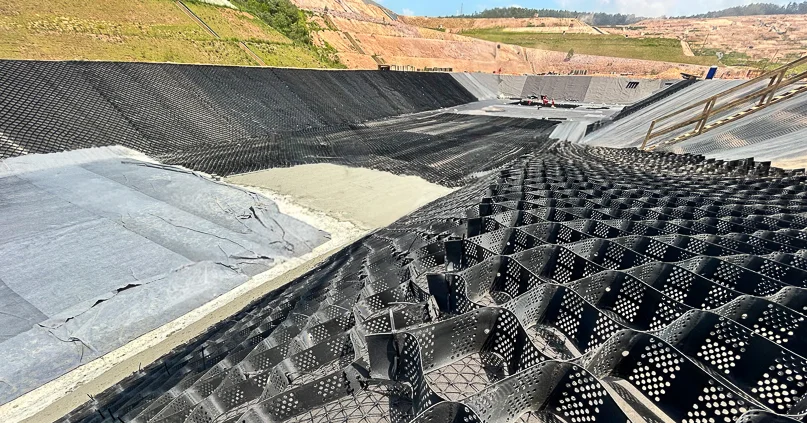
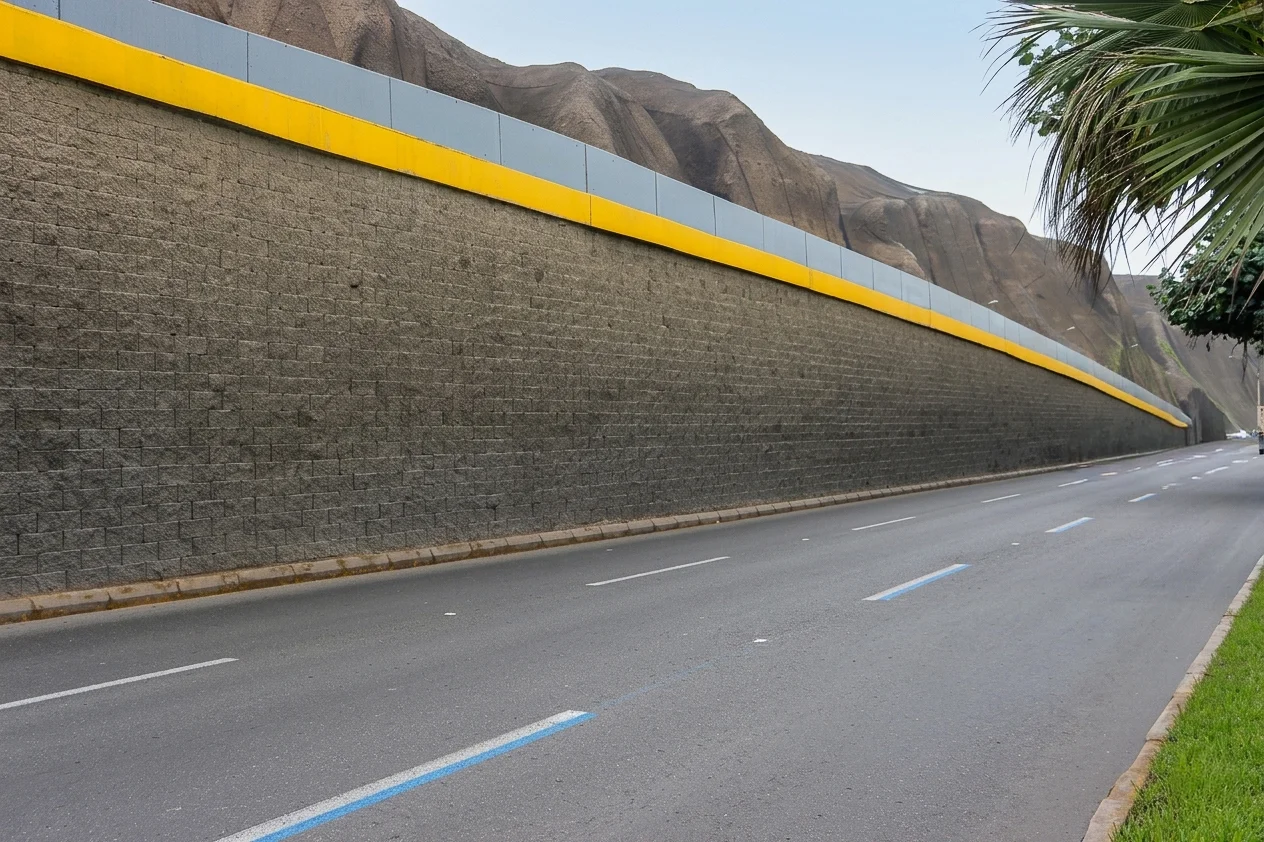
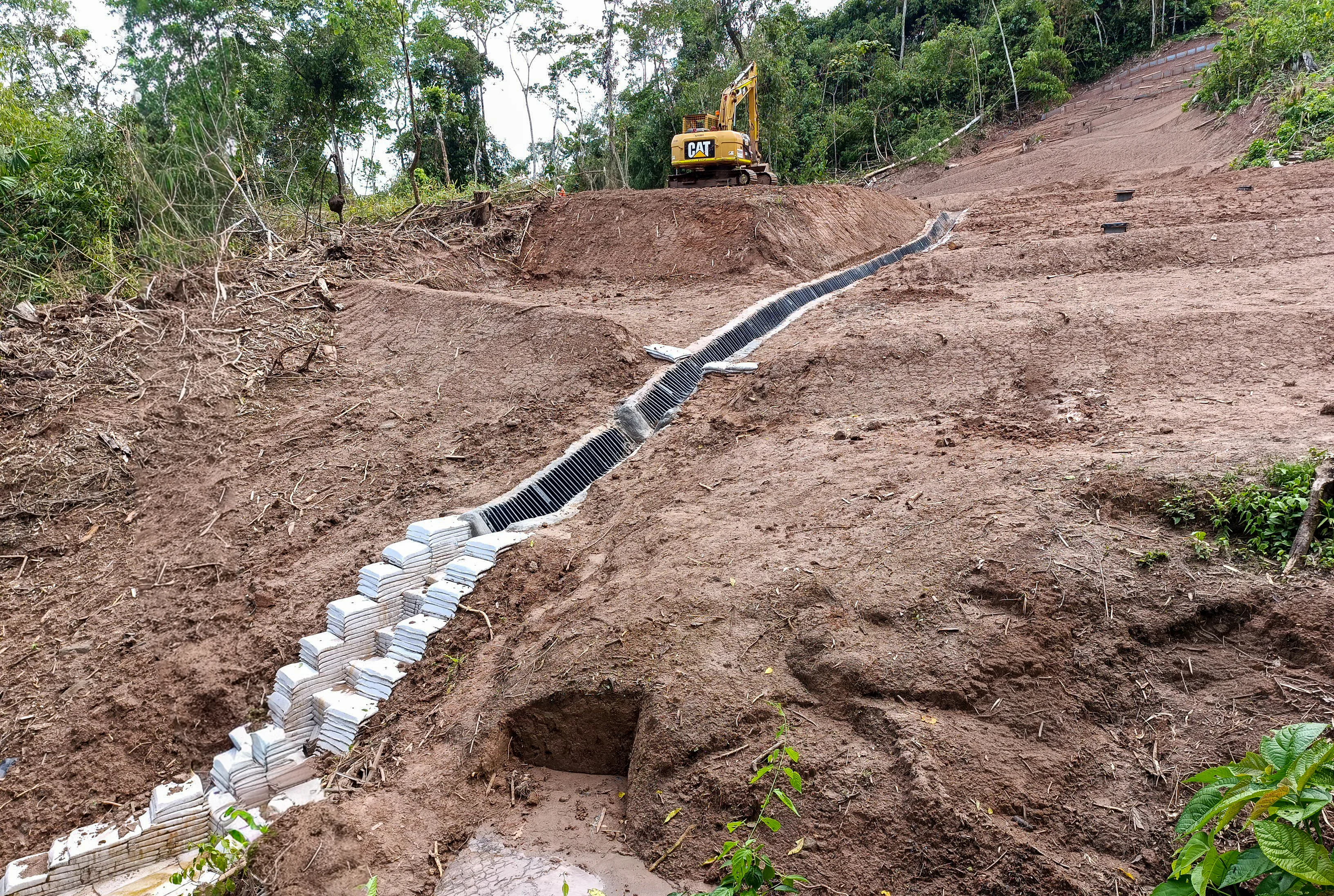
Soil Stabilization on Slopes and Embankments
Reinforcement of Retaining Walls and Reinforced Soil Structures
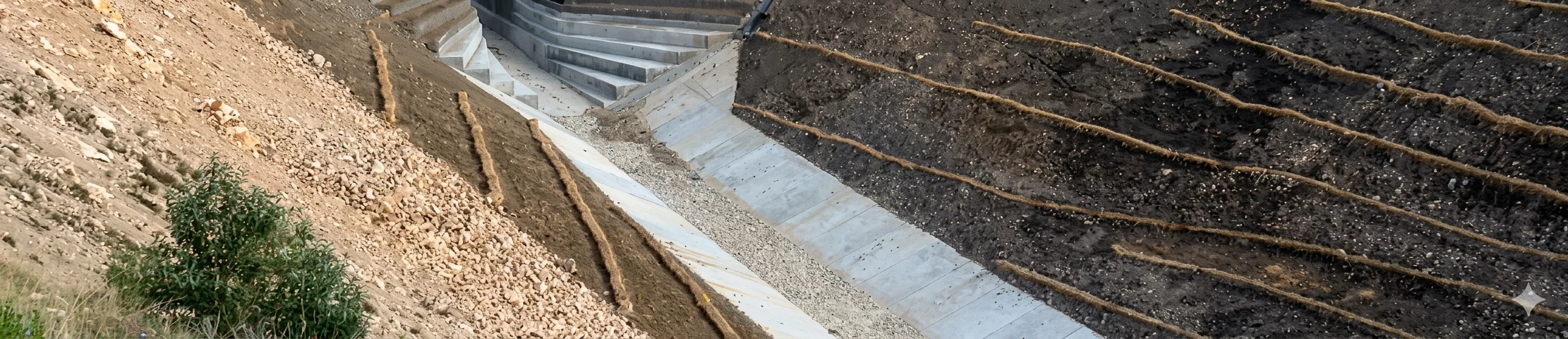
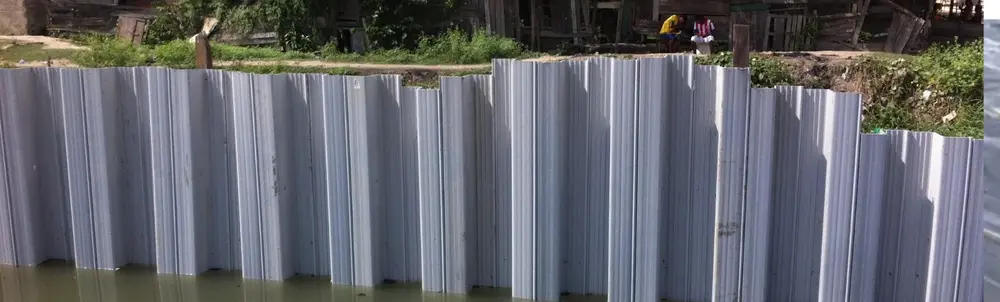
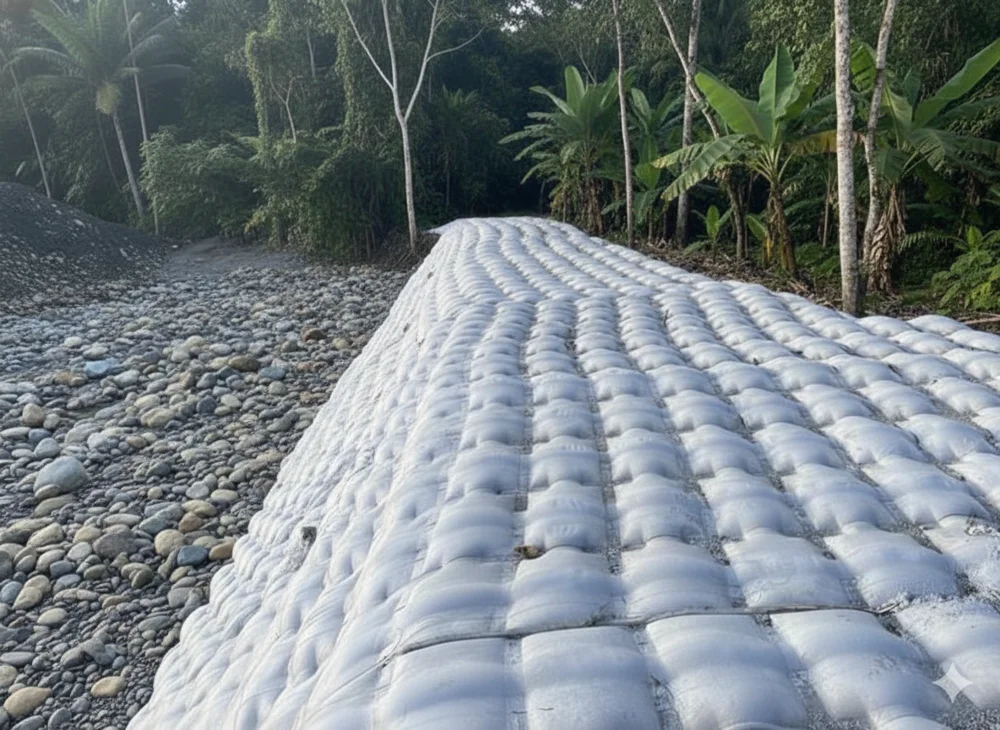
Erosion Control in Channels and Riverbanks
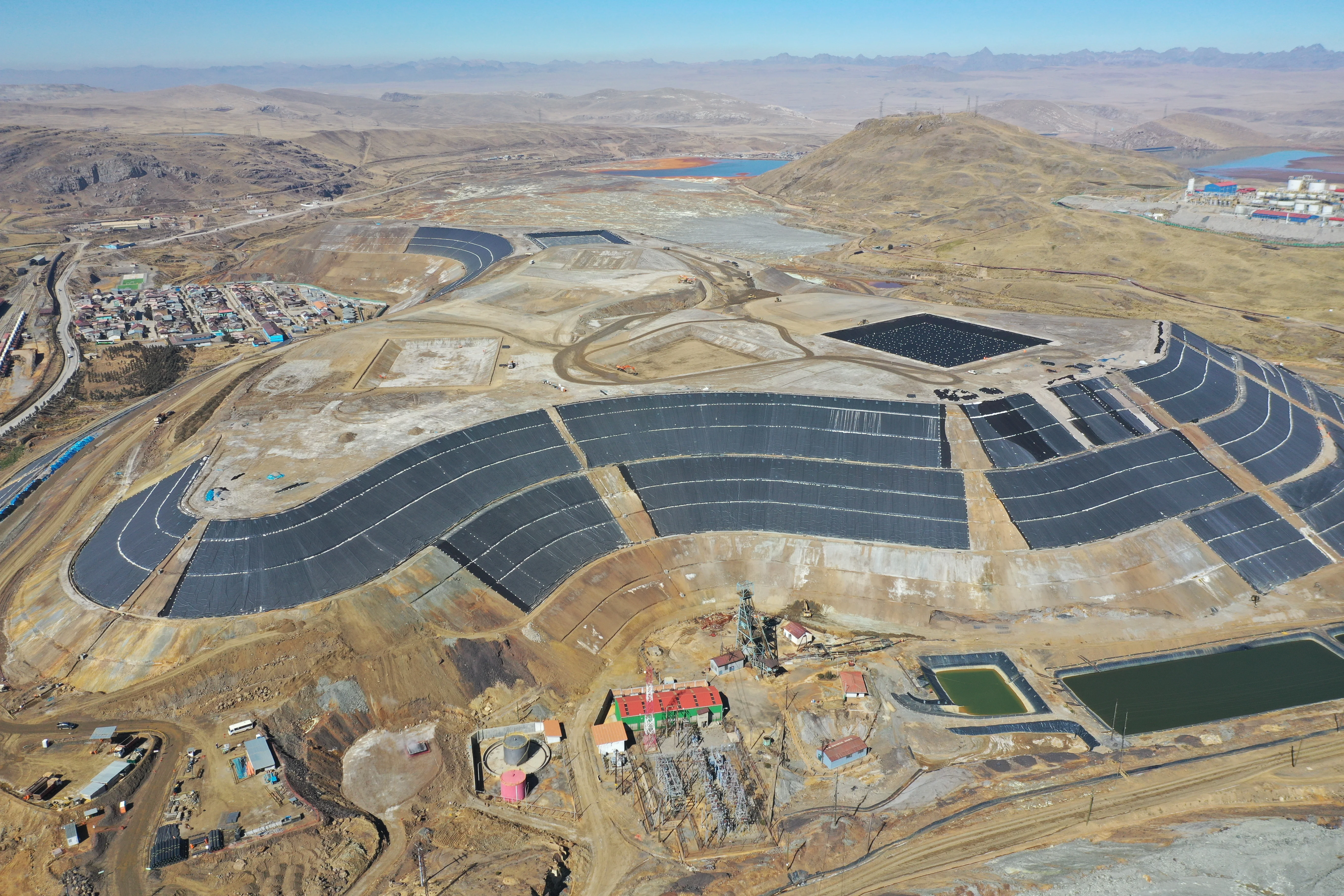
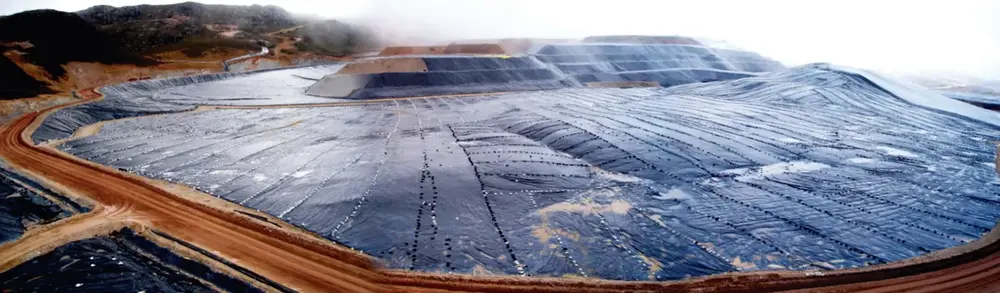
Stabilization of Leaching Heaps or Tailings Dams
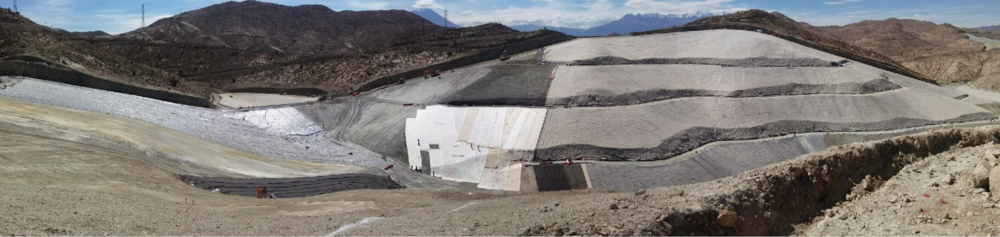
Mine Closure
Sanitary Landfills
Application sectors
Mining
Roads
Airports and ports
Railways
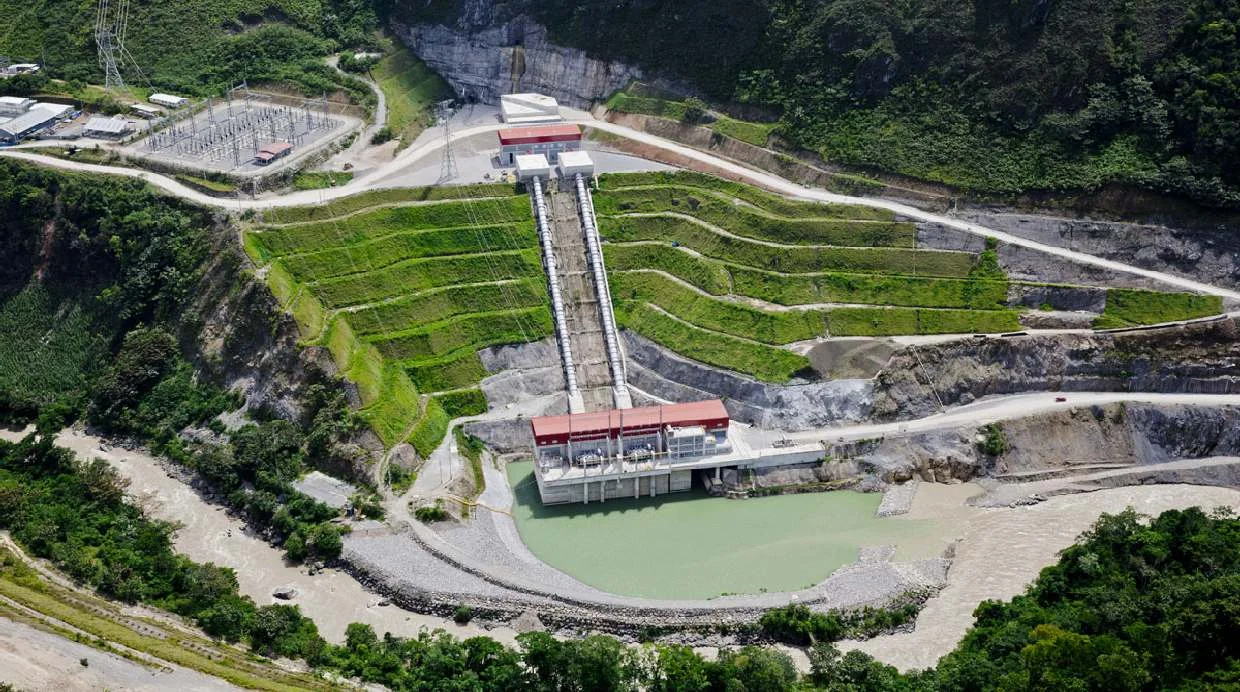
Energy
Hydrocarbons
Urban development
Mining
Roads
Airports and ports
Railways
Energy
Hydrocarbons
Urban development
Mining
Roads
Airports and ports
Railways
Energy
Hydrocarbons
Urban development
Some projects completed
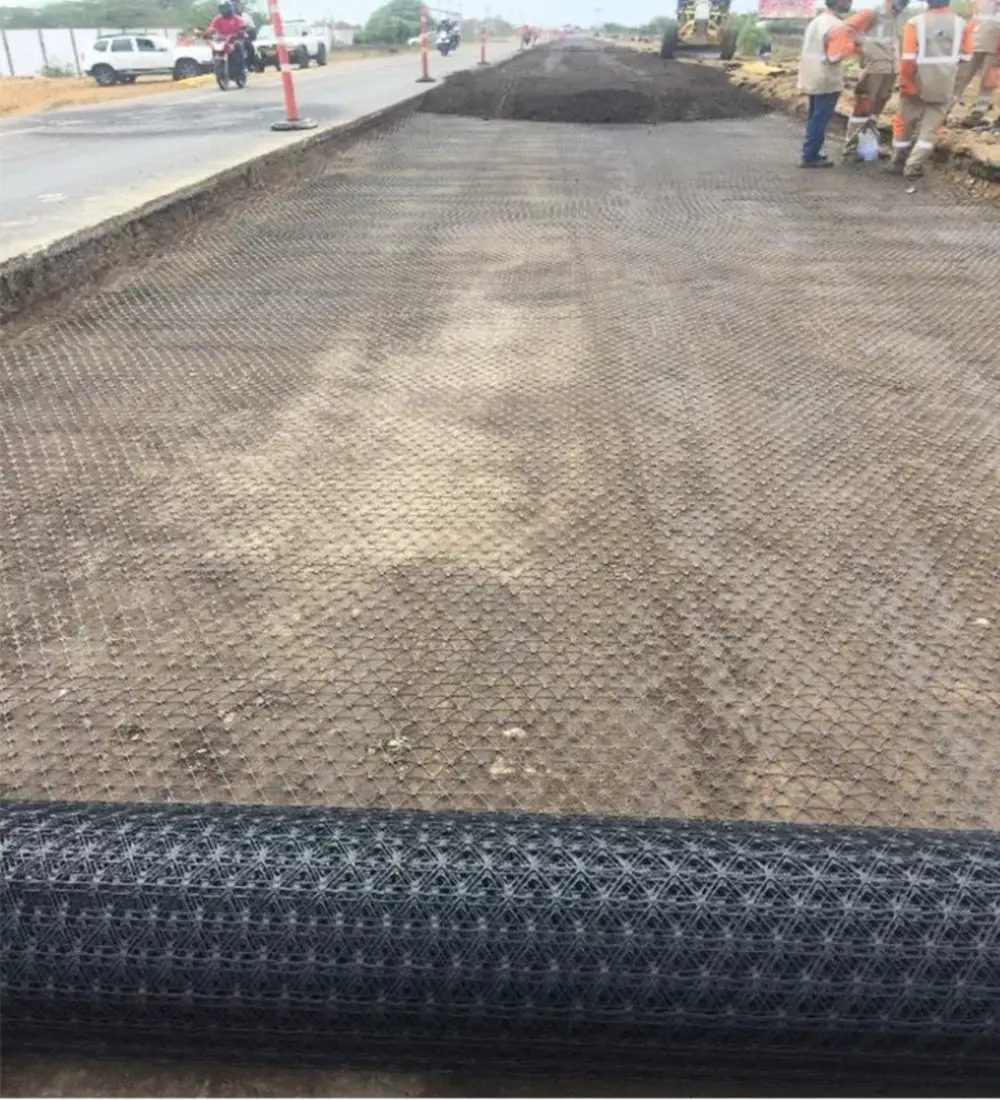
Asphalt reinforcement on the Puerto López – Puerto Gaitán road, Colombia
Road Rehabilitation: Santa Marta – Rio Hacha – Parahuachón Concession, Colombia
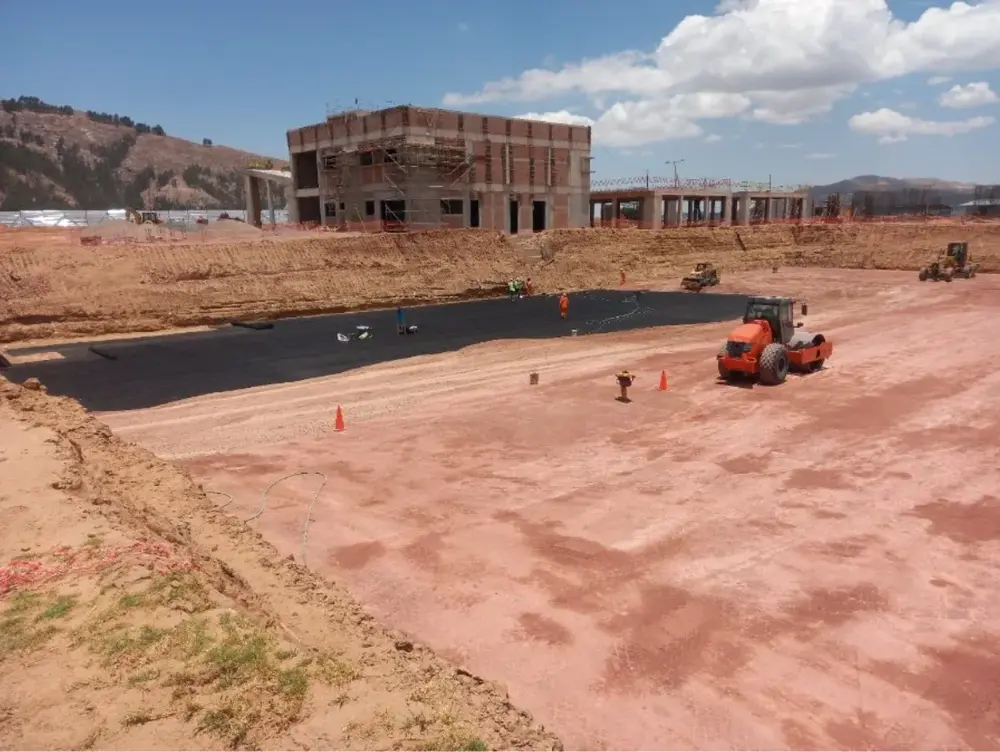
Improvements to the Lucio Aldazabal Pauca Hospital foundation. Huancané, Puno, Peru
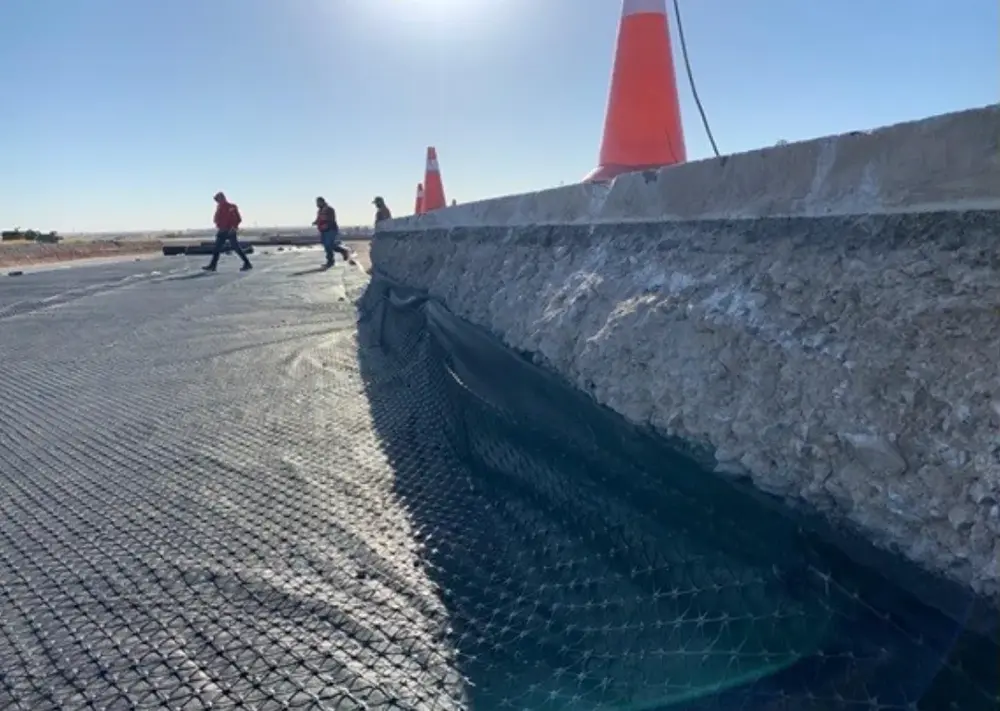
Subgrade Improvement at Tampico International Airport, Tamaulipas, Mexico
Asphalt reinforcement on the Puerto López – Puerto Gaitán road, Colombia
Road Rehabilitation: Santa Marta – Rio Hacha – Parahuachón Concession, Colombia
Improvements to the Lucio Aldazabal Pauca Hospital foundation. Huancané, Puno, Peru
Subgrade Improvement at Tampico International Airport, Tamaulipas, Mexico
Asphalt reinforcement on the Puerto López – Puerto Gaitán road, Colombia
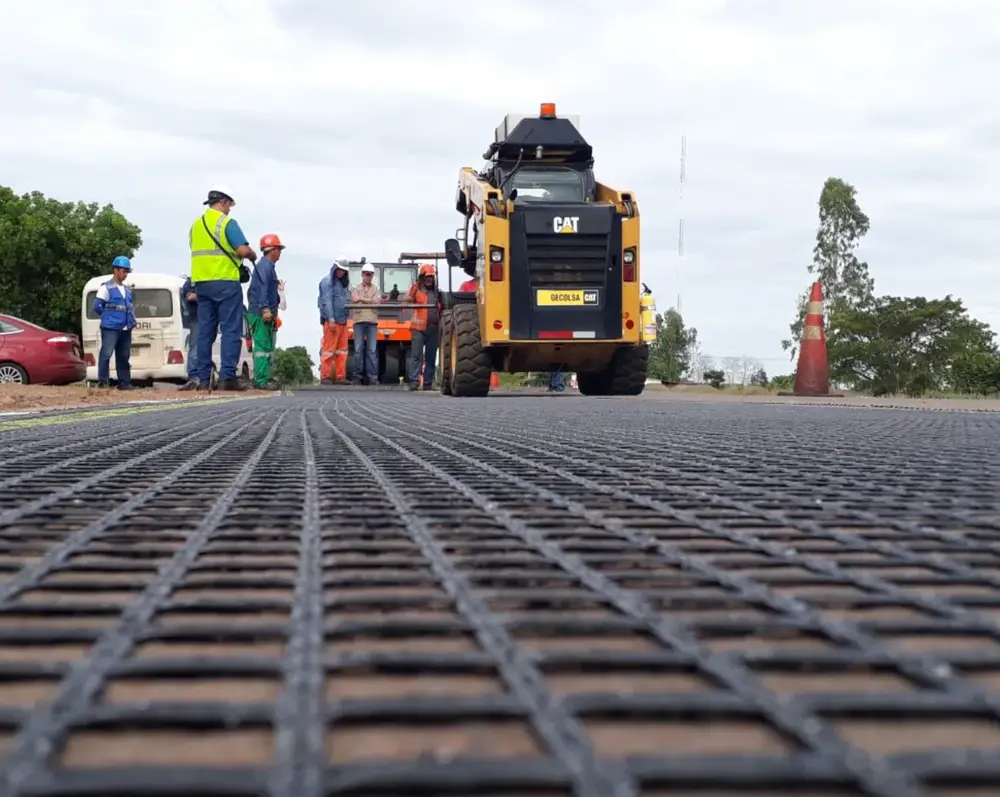
The existing flexible pavement exhibited a moderate degree of cracking, which compromised its surface integrity and accelerated the structural deterioration of the constructed asphalt overlays.
As an intervention strategy, an asphalt overlay reinforced with fiberglass geogrid was applied, designed to control crack reflection and improve stress distribution.
Road Rehabilitation: Santa Marta – Rio Hacha – Parahuachón Concession, Colombia
The flexible pavement was in an advanced state of deterioration, evidenced by medium-to-high severity deformations and cracking. This condition compromised its structural functionality and posed a direct threat to the road’s durability throughout its service life.
Given this situation, the decision was made to reinforce the granular bases with the addition of T-6 multiaxial geogrids, with the aim of increasing load-bearing capacity and effectively controlling damage propagation. This solution significantly improved pavement performance within the design period, optimizing its structural performance and reducing long-term maintenance costs.
Improvements to the Lucio Aldazabal Pauca Hospital foundation. Huancané, Puno, Peru
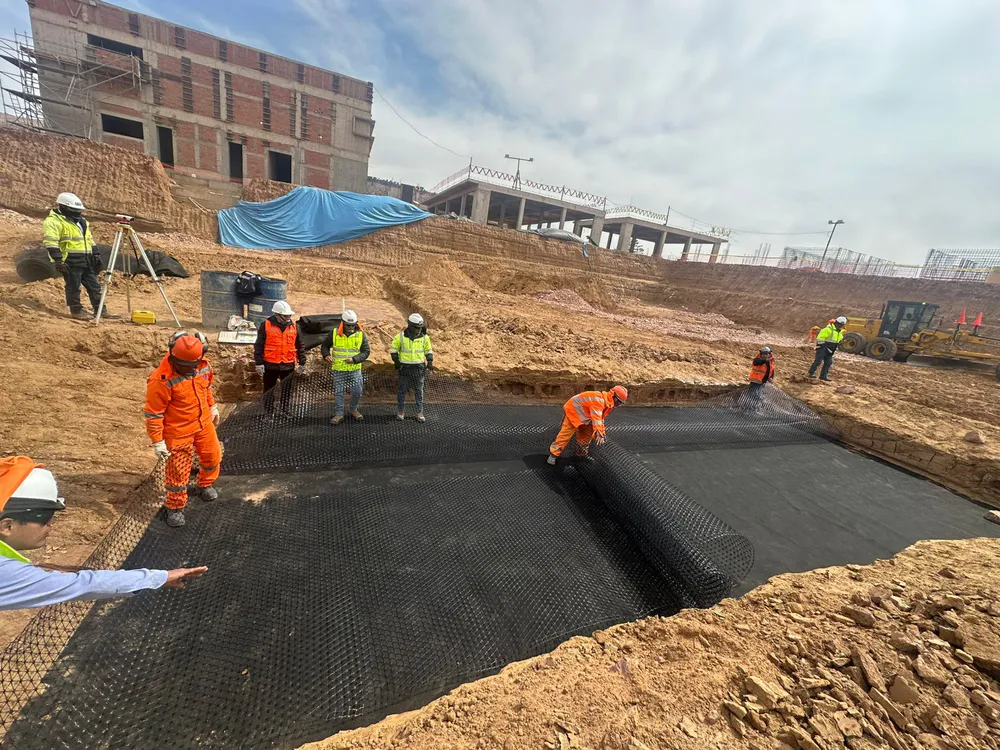
In the construction project for the new Lucio Aldazábal Pauca Hospital, a foundation soil with low load-bearing capacity was identified, insufficient to withstand the new load demands.
As a solution, the foundation was reinforced by incorporating granular material with geosynthetics, using T-6 multiaxial rigid geogrids. This intervention increased the soil’s shear strength and achieved the required load-bearing capacity, ensuring a solid and reliable foundation for the hospital.
Subgrade Improvement at Tampico International Airport, Tamaulipas, Mexico
In the Tampico International Airport improvement project in Tamaulipas, Mexico, soft soils with low undrained shear strength were identified.
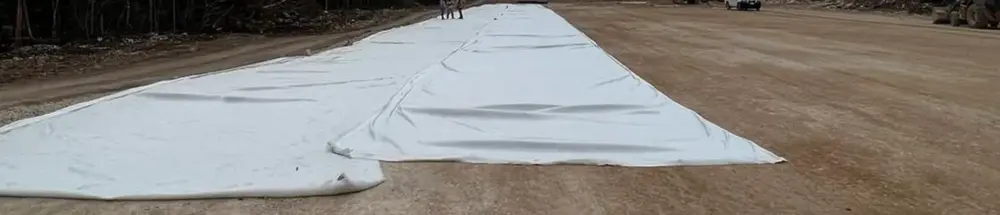
To address this geotechnical condition, a subgrade improvement system using geosynthetics was implemented, consisting of a nonwoven geotextile combined with a T-7 multiaxial geogrid. This solution reinforced the ground structure, increased its rigidity, and improved the performance of the airport infrastructure, ensuring a reliable and solid foundation.
Asphalt reinforcement on the Puerto López – Puerto Gaitán road, Colombia
The existing flexible pavement exhibited a moderate degree of cracking, which compromised its surface integrity and accelerated the structural deterioration of the constructed asphalt overlays.
As an intervention strategy, an asphalt overlay reinforced with fiberglass geogrid was applied, designed to control crack reflection and improve stress distribution.
Road Rehabilitation: Santa Marta – Rio Hacha – Parahuachón Concession, Colombia
The flexible pavement was in an advanced state of deterioration, evidenced by medium-to-high severity deformations and cracking. This condition compromised its structural functionality and posed a direct threat to the road’s durability throughout its service life.
Given this situation, the decision was made to reinforce the granular bases with the addition of T-6 multiaxial geogrids, with the aim of increasing load-bearing capacity and effectively controlling damage propagation. This solution significantly improved pavement performance within the design period, optimizing its structural performance and reducing long-term maintenance costs.
Improvements to the Lucio Aldazabal Pauca Hospital foundation. Huancané, Puno, Peru
In the construction project for the new Lucio Aldazábal Pauca Hospital, a foundation soil with low load-bearing capacity was identified, insufficient to withstand the new load demands.
As a solution, the foundation was reinforced by incorporating granular material with geosynthetics, using T-6 multiaxial rigid geogrids. This intervention increased the soil’s shear strength and achieved the required load-bearing capacity, ensuring a solid and reliable foundation for the hospital.
Subgrade Improvement at Tampico International Airport, Tamaulipas, Mexico
In the Tampico International Airport improvement project in Tamaulipas, Mexico, soft soils with low undrained shear strength were identified.
To address this geotechnical condition, a subgrade improvement system using geosynthetics was implemented, consisting of a nonwoven geotextile combined with a T-7 multiaxial geogrid. This solution reinforced the ground structure, increased its rigidity, and improved the performance of the airport infrastructure, ensuring a reliable and solid foundation.
Need advice?
Our team of experts is ready to advise you and help you find the best option for your project.
Success stories
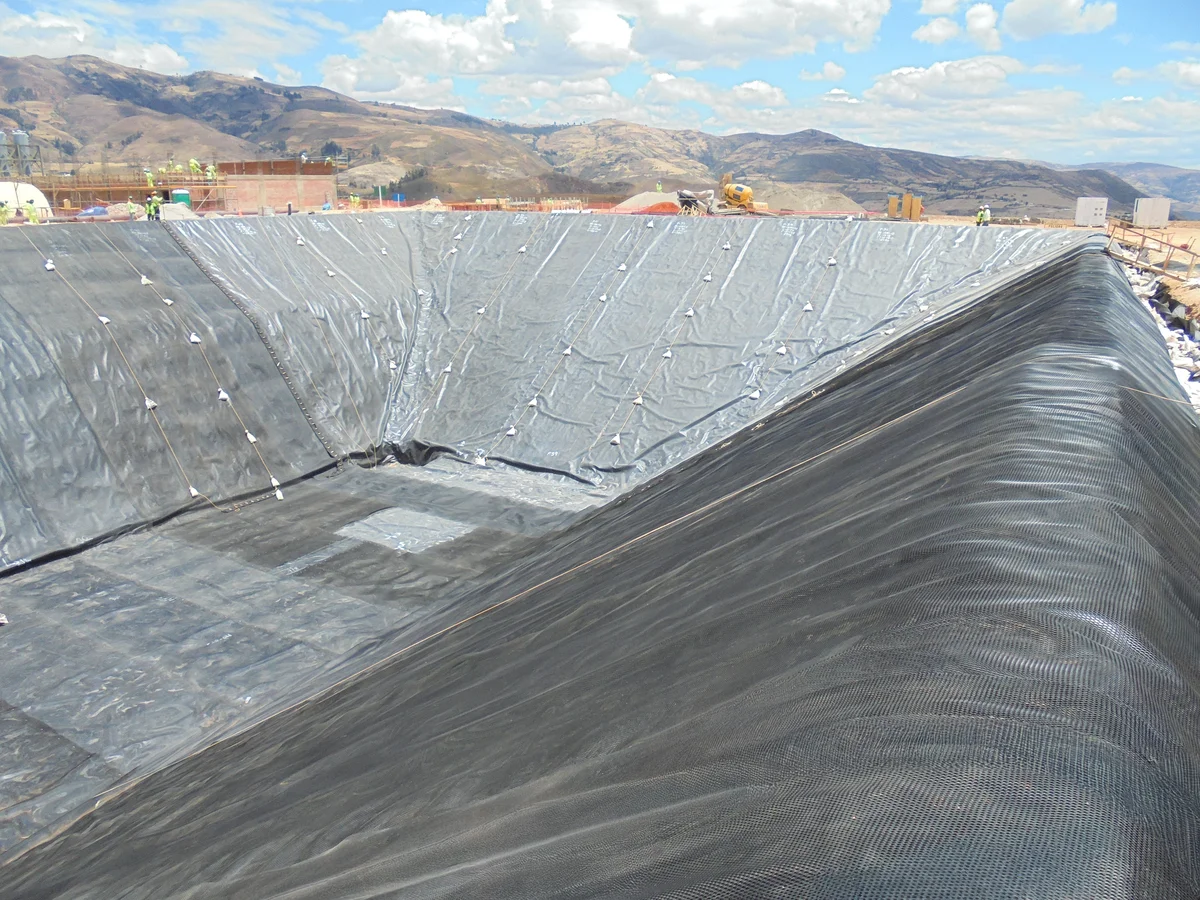
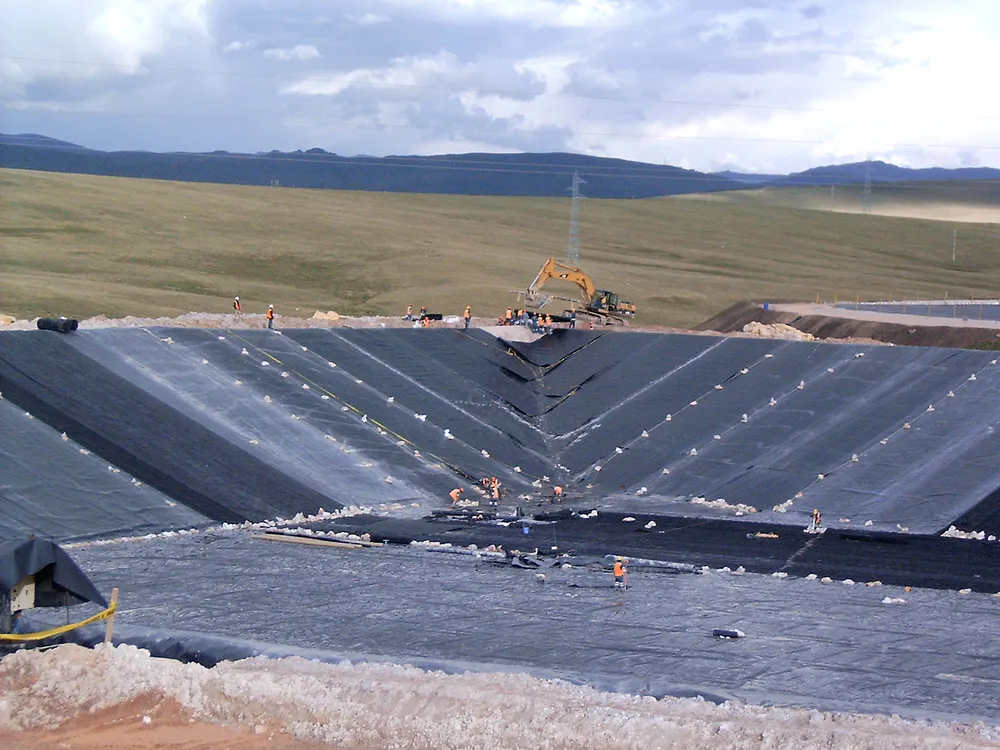
Leaching pads – Geomembranes – La Libertad, Peru.
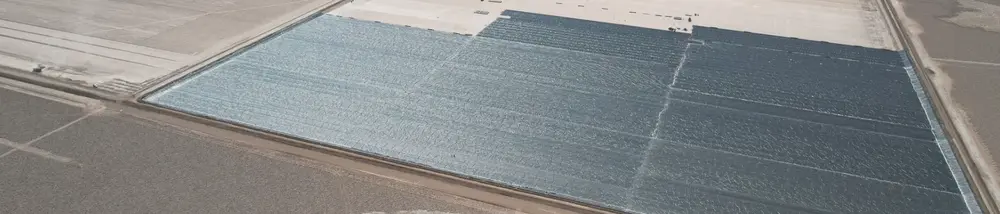
The waterproofing of the Lagunas Norte leach pad has completed Phase 2, a project TDM has been carrying out since Phase 0. The total ore volume at the end of...
We were at Arminera, one of the most important events in the Argentine mining sector, presenting our engineering solutions with geosynthetics, applied to the main challenges of mining projects. We...
The waterproofing of the Lagunas Norte leach pad has completed Phase 2, a project TDM has been carrying out since Phase 0. The total ore volume at the end of...
We were at Arminera, one of the most important events in the Argentine mining sector, presenting our engineering solutions with geosynthetics, applied to the main challenges of mining projects. We...